
Preventing Trailer Sway
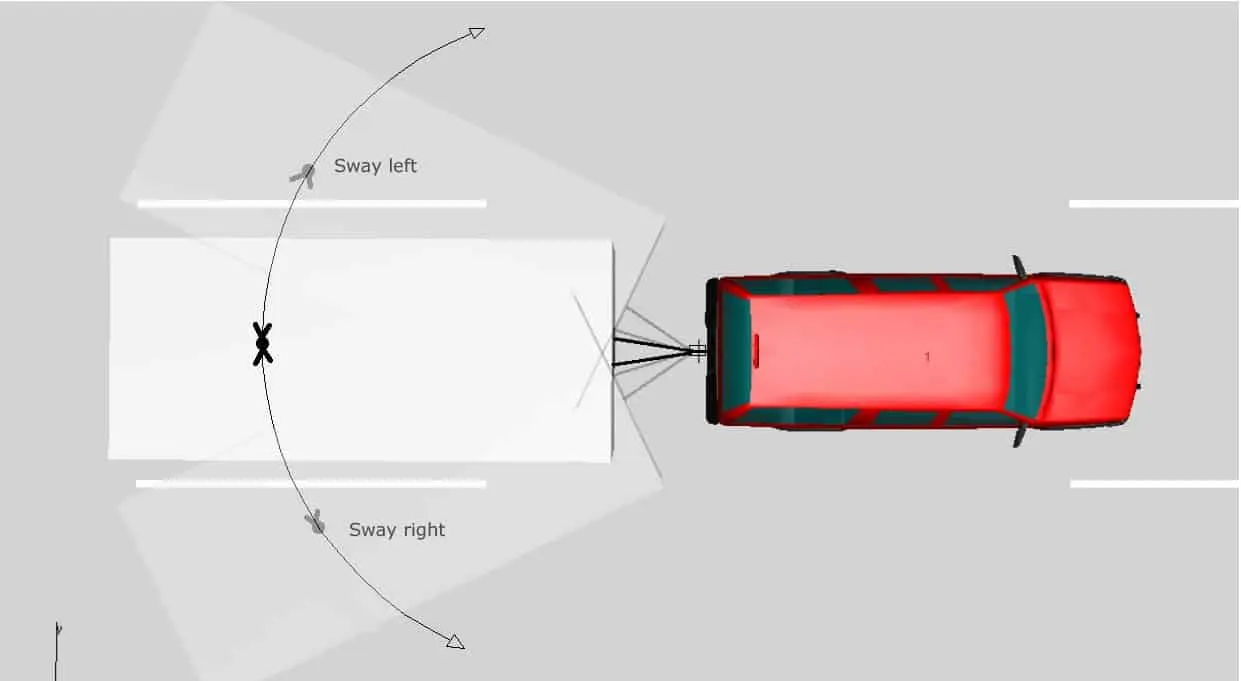
If you have towed trailers for any length of time, you have probably experienced a trailer's unnerving side-to-side motion that begins to affect the towing vehicle. This vehicular tail wagging is called trailer sway, and it should be a central concern for anyone towing a trailer. The Valley RV Supercenter discusses the issue in detail.
Trailer sway is one of the most dangerous situations a driver can face while towing—but it's also one of the most preventable. What usually starts as a small wobble can quickly escalate into a dangerous situation, destabilizing your tow vehicle and potentially damaging both the tow vehicle and the trailer. Left unchecked, trailer sway can effectively push the tail end of your tow rig enough to swing you into another lane or even off the road entirely. Should you need to brake as this is occurring, the trailer could jackknife, swinging so hard in one direction that it could strike the tow vehicle or knock it off course.
What to Do When You Encounter Trailer Sway
It is likely that you encountered trailer sway at a certain highway speed. The faster the speed, the greater the likelihood of trailer sway, so you will want to gradually reduce your speed to below your sway threshold. This is best done by lifting off the accelerator rather than quickly applying the brakes, as the latter can trigger a jackknifed trailer. Keep the speed below the trailer sway threshold. If this speed proves much slower than you want to travel, put up with it for the time being and then take measures to prevent the occurrence once you are stopped.

Balance your Trailer Load
How can you do that? Balance your trailer's load properly. One of the biggest triggers of trailer sway is when there is too much weight placed behind the trailer axle or towards the back of the trailer, and not enough weight placed towards the front, or over the trailer's tongue. An improperly loaded trailer will amplify every lateral motion it encounters, and potentially become a pendulum attached to the back of your vehicle.
Ideally, 60% of a trailer’s weight should be in front of the axle. Most travel trailers are designed this way, but if you find the rear of the trailer more convenient for cargo, it can interfere with the trailer’s designed-in weight distribution. If the trailer is basically a platform and your cargo makes up much of the load, it will be up to you to distribute the weight correctly.
At the same time, be aware of increasing your tongue weight. Ideally, it should be 10-15% of the trailer’s total weight. Much less than that probably means you have less than 60% of the weight in front of the axle, and trailer sway will increase. Too much weight at the tongue will cause sagging at the hitch.
Maintain Correct Tire Pressure
Low tire pressure on one or more tires can reduce sidewall stiffness, increasing trailer sway. Ensure tires are inflated to the recommended pressure. If your tow vehicle uses passenger-rated (p-rated) tires, consider upgrading to Light Truck (LT) or higher-rated tires, which are better suited for towing. P-rated tires are not designed for towing stability, whereas LT and higher-rated tires can withstand higher pressures and sidewall stress.
Coordinate the tow vehicle’s wheelbase with the trailer length. The shorter the wheelbase of the two vehicles, the greater the risk of sway. For a good rule of thumb on vehicle/trailer size proportions, consider this rule of thumb: take the vehicle’s wheelbase in inches and divide by five. The resulting figure in feet should be the maximum length of the trailer you pull. As an example, a Chevrolet Silverado crew cab with a short bed has a wheelbase of 147.4 inches. Divide that by five, and you get 29.4. The longest trailer should be no longer than 29.4 feet.
Adding a Sway Bar
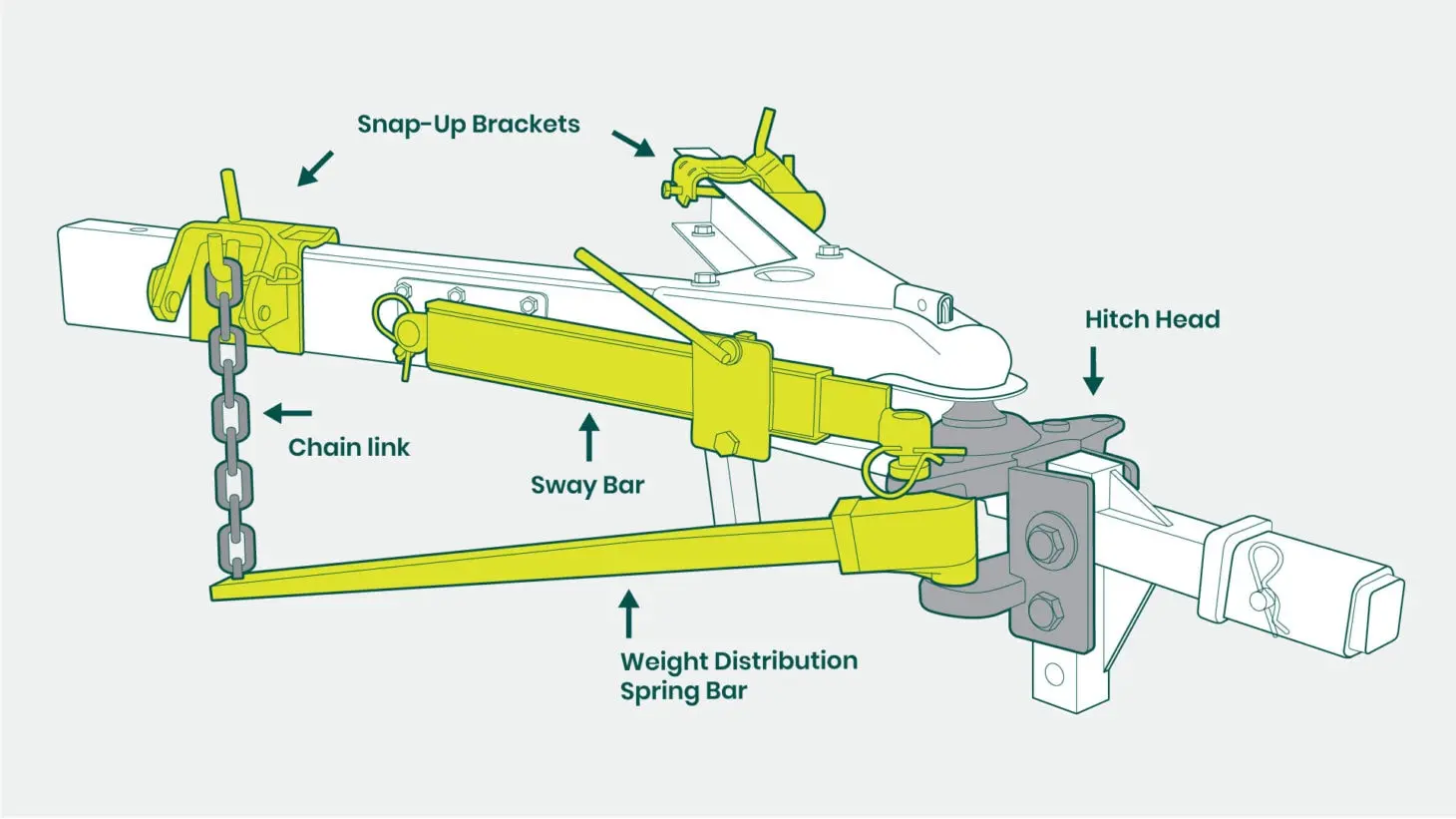
If you don’t want to travel at a speed where trailer sway is occurring and you have done what you can with trailer load and tire pressure, you will likely want to add a sway bar to your hitch arrangement. Sway bars are shock absorber-like bars that connect to one angle of the trailer tongue, leading to the hitch, and provide resistance to turning between the trailer and tow vehicle. Their expansion movement should be light enough to enable turning, but stiff enough to prevent a trailer’s side-by-side motion.
Switching to a Weight Distribution Hitch
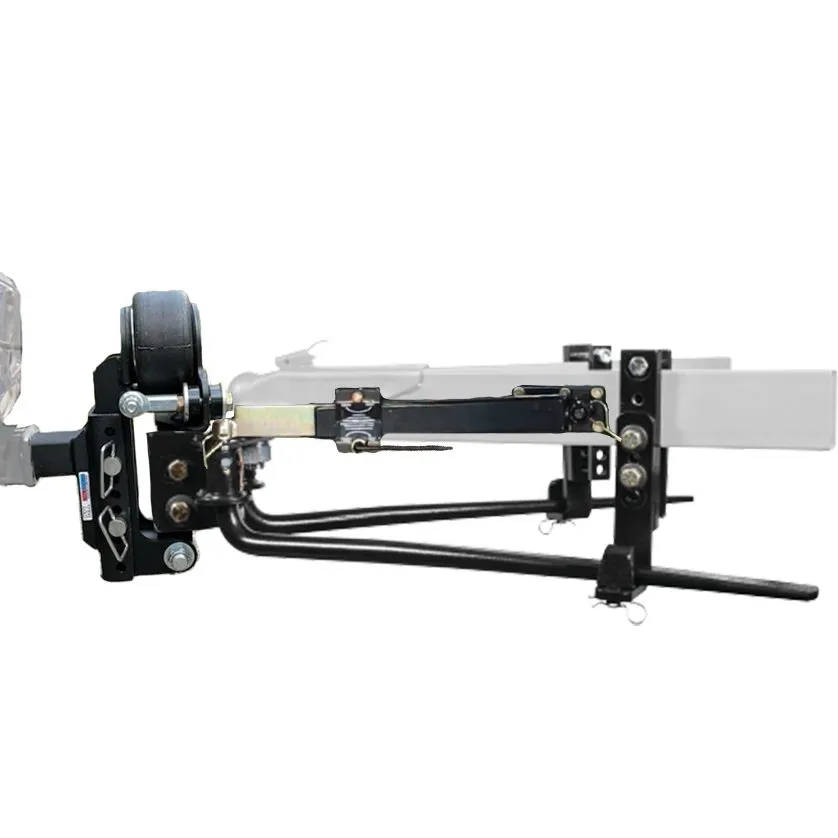
Large trailers over 20 feet, as well as heavy trailers like tow-boxes or horse trailers, can benefit from towing stability with a weight-distribution hitch. This device uses spring bars that connect to the trailer's A-frame below the coupling, providing upward leverage. This "wheelbarrow effect" raises the rear of your tow vehicle, redistributing some of the load to the front tires and trailer axles, thereby enhancing braking and steering control. The hitches should be compatible with or have their own sway control bar as well.
By taking a step-by-step approach to preventing trailer sway, starting with load redistribution and checking tire pressure, and possibly adding one or more hitch enhancements, you should be able to restabilize your trailer for towing at a comfortable highway speed. If you continue to have trailer sway after taking the initial measures, ask the professionals at the Valley RV Supercenter for advice.