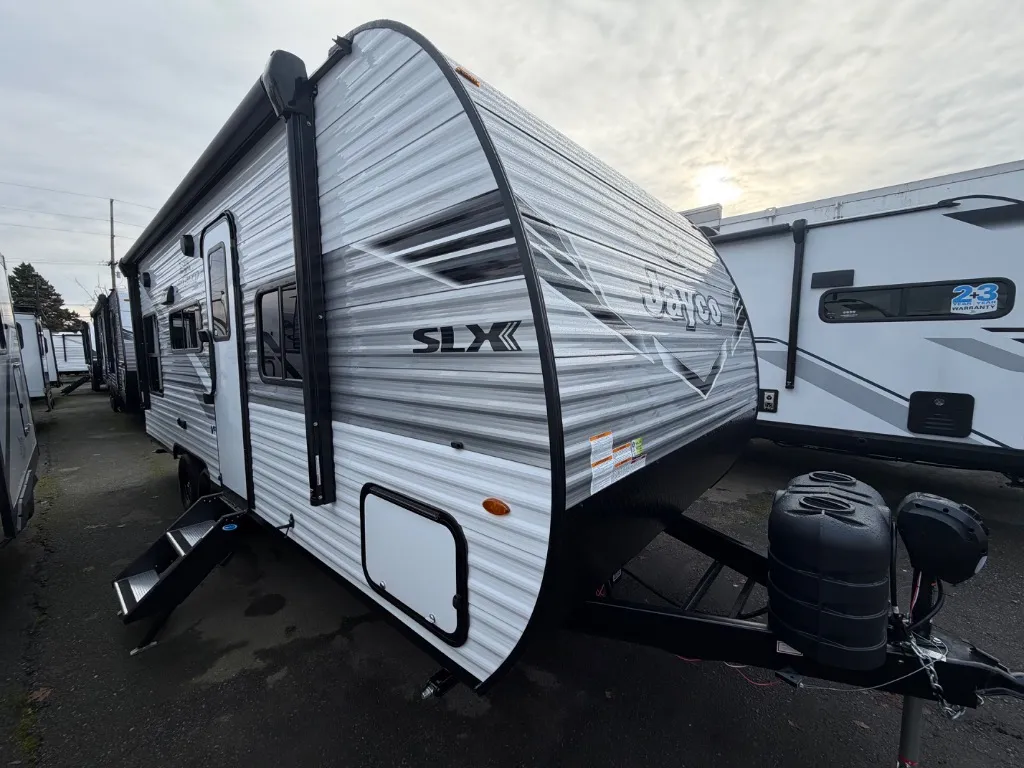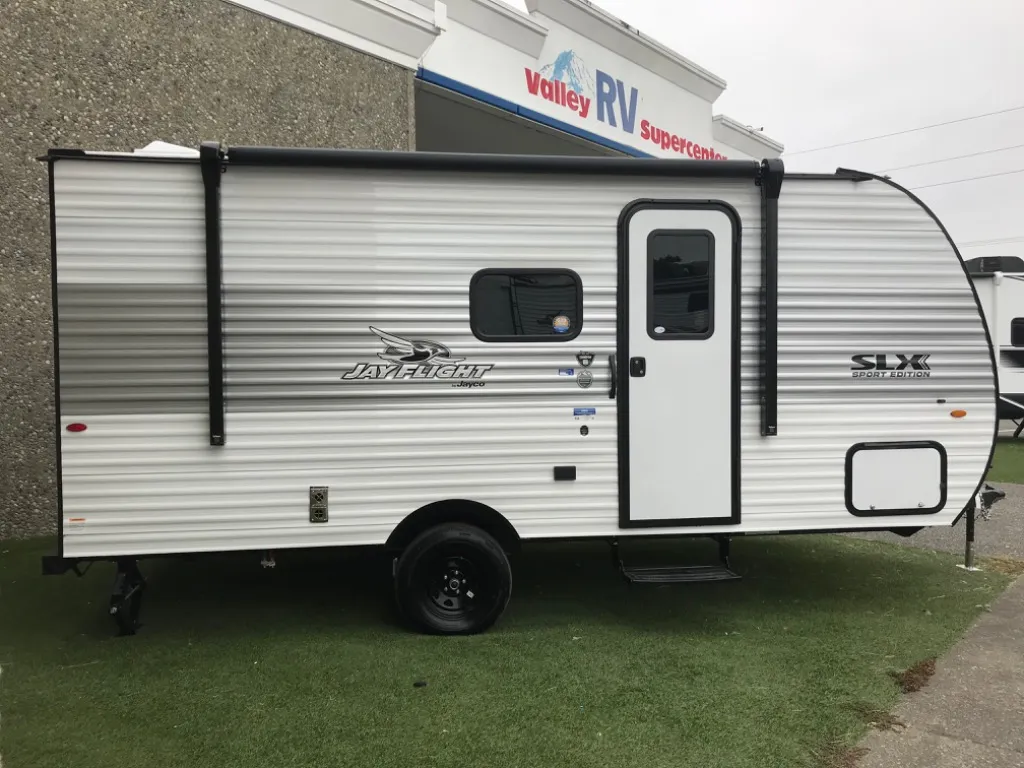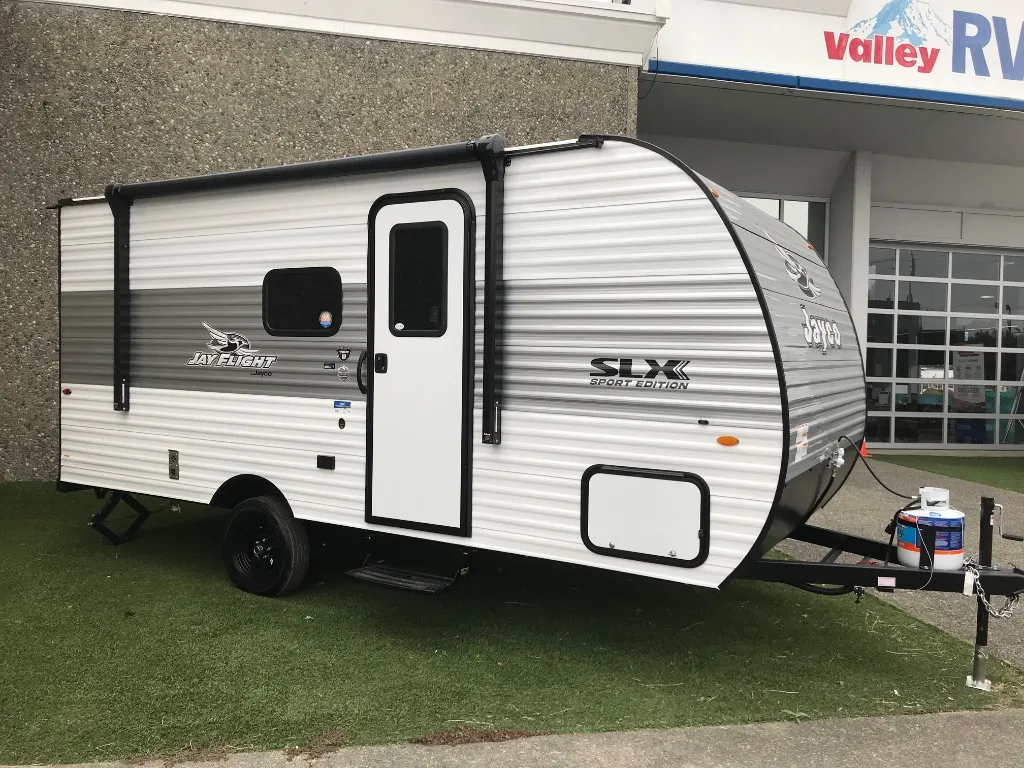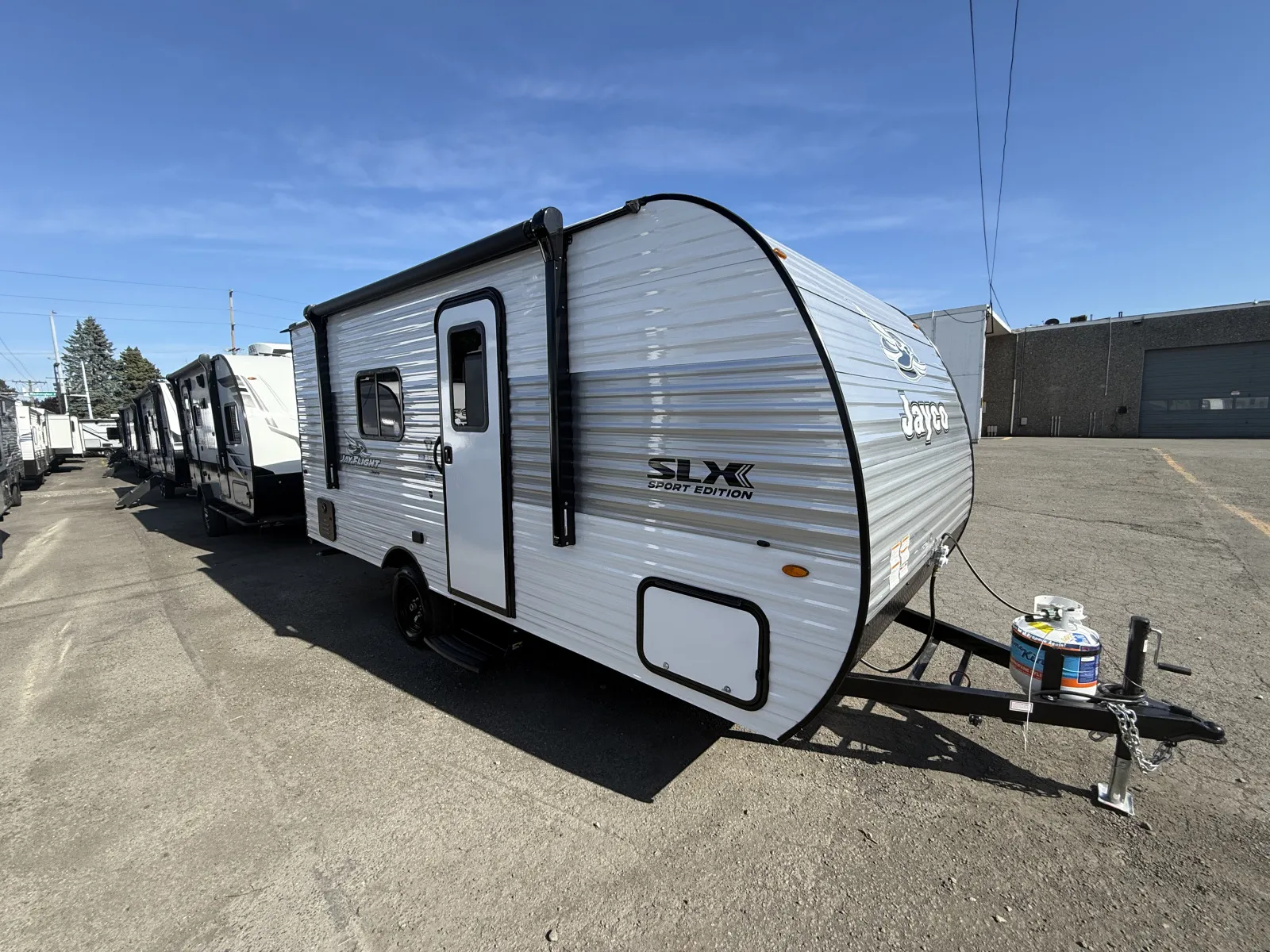

RV Service Priorities for Wildfire Smoke, Dust, and RV Air Quality
Smoke from fires near Snoqualmie Pass drifted into western Washington just days ago, and the Washington State Department of Ecology has an emergency burn ban in place statewide through September 30, 2026. None of that is a distant eastern-Washington problem anymore. If you're heading east on I-90 this month, or you just got back, your rig has already been breathing that air. Here's what to check.
Our service team in Kent is booking smoke-season inspections now
An RV is not a house, and the smoke guides written for home HVAC systems miss the specific vulnerabilities you're dealing with. Think slide-out seals, roof vent gaskets with age-cracked foam, storage bay doors with imperfect compression seals, and AC units that ship from the factory with MERV 6 filters rated for pollen rather than PM2.5. The checklist closes that gap.
What Goes on the Checklist?
The checklist breaks into two phases, before or during a smoke event and after you return, so work top to bottom and give the first three items the most weight while smoke is active. Start there, then move down.
Before or during a smoke event:
- [ ] Close all roof vents completely. A cracked lid lets smoke draft straight into the cabin. Close and latch them; do not rely on the screen alone.
- [ ] Switch your AC to recirculation mode, instead of fresh-air intake. Running fresh-air intake during a smoke event draws smoky outdoor air directly into the living space.
- [ ] Inspect and replace your AC filter. Coleman-Mach recommends replacing AC filters after 90 days of AC use under normal conditions. During active smoke? Check it every two weeks. A clogged filter doesn't just filter less; per the EPA, it can push trapped particles back into circulation.
- [ ] Upgrade your filter if your AC unit supports it. Most RVs ship with MERV 6 filters. The EPA recommends MERV 13 for wildfire smoke events. Check your unit's specification sheet before upgrading, because a filter rated higher than your blower supports can restrict airflow and strain the motor.
- [ ] Check slide-out seals for gaps. Run your hand along the full perimeter of each slide while it's extended. A gap you can feel is a gap smoke can enter. Compressed foam that no longer springs back needs replacement.
- [ ] Inspect roof vent gaskets. The rubber or foam gasket around the base of each vent dome dries and cracks with UV exposure. A failed gasket that's fine for rain can still let fine particulate smoke infiltrate. Press the gasket with a finger; if it doesn't compress and recover, it's due for replacement.
- [ ] Check door and window seals. Slide your hand along door frames with the door shut. Cold air leaks in winter mean smoke leaks in summer through the same gaps.
- [ ] Check storage bay and pass-through compartment doors. These are often overlooked. Smoke infiltrating a storage bay can seep into the living area through interior wall penetrations.
- [ ] Add a portable HEPA air purifier inside the cabin. An EPA study found that running an upgraded HVAC filter and fan continuously can cut indoor PM2.5 levels by roughly half during a smoke event. A portable HEPA unit adds targeted filtration on top of that, especially in sleeping areas.
- [ ] Monitor indoor AQI with a portable sensor. An outdoor AQI reading doesn't tell you what you're breathing inside. A portable PM2.5 monitor, placed in the main living area, gives you a real number to act on.
After returning from a smoky trip:
- [ ] Replace your AC filter before storing. Smoke particles trapped in a used filter off-gas inside a closed rig. Don't store with a dirty filter.
- [ ] Wipe down all interior surfaces with a damp cloth. Fine soot and ash settle on every surface, including your HVAC return grilles and ceiling panels. Dry-dusting resuspends the particles; damp-wiping captures them.
- [ ] Vacuum with a HEPA-equipped vacuum. Standard vacuums re-emit fine particles through the exhaust. A HEPA-sealed unit keeps them captured.
- [ ] Air out the rig when air quality is genuinely good. Check AQI first. The EPA defines "Good" as 0-50 on the AQI scale. Opening up when AQI is in that range helps flush residual odor without reintroducing smoke.
Why These Items Matter More in an RV Than at Home
An RV needs more smoke defense than a house because its structure was built to flex, move, and take years of road vibration rather than to seal like an inspected building envelope, and that difference means the seals work differently and degrade faster than you'd expect. Your house was engineered and inspected as a fixed envelope. Your RV wasn't.
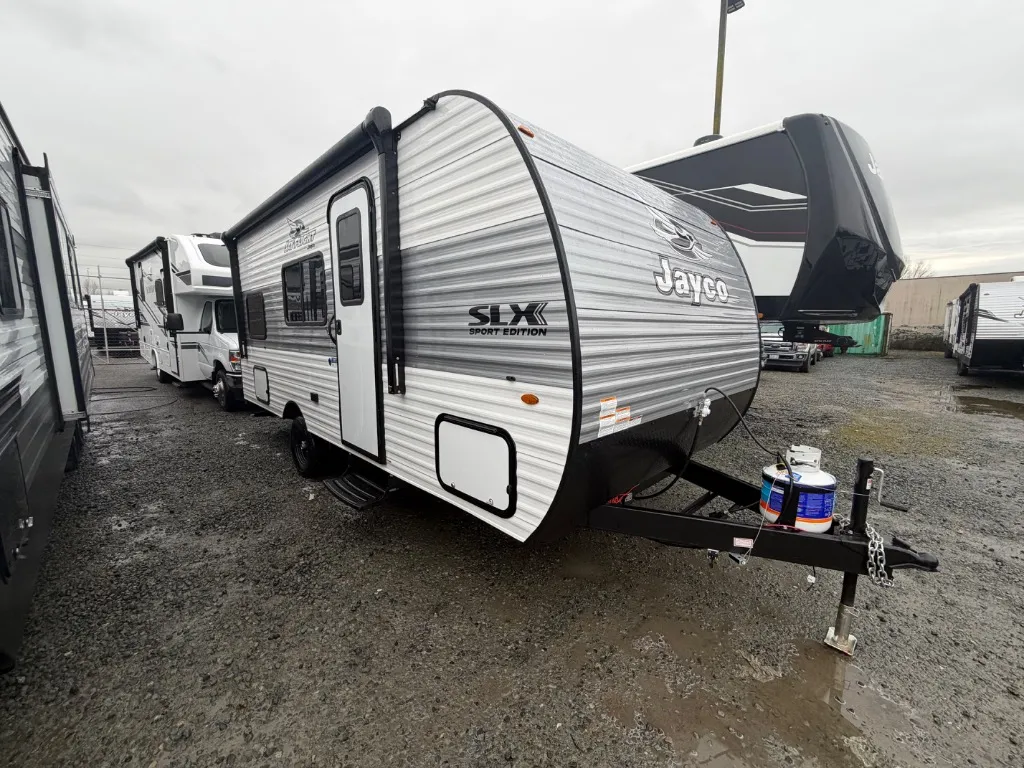
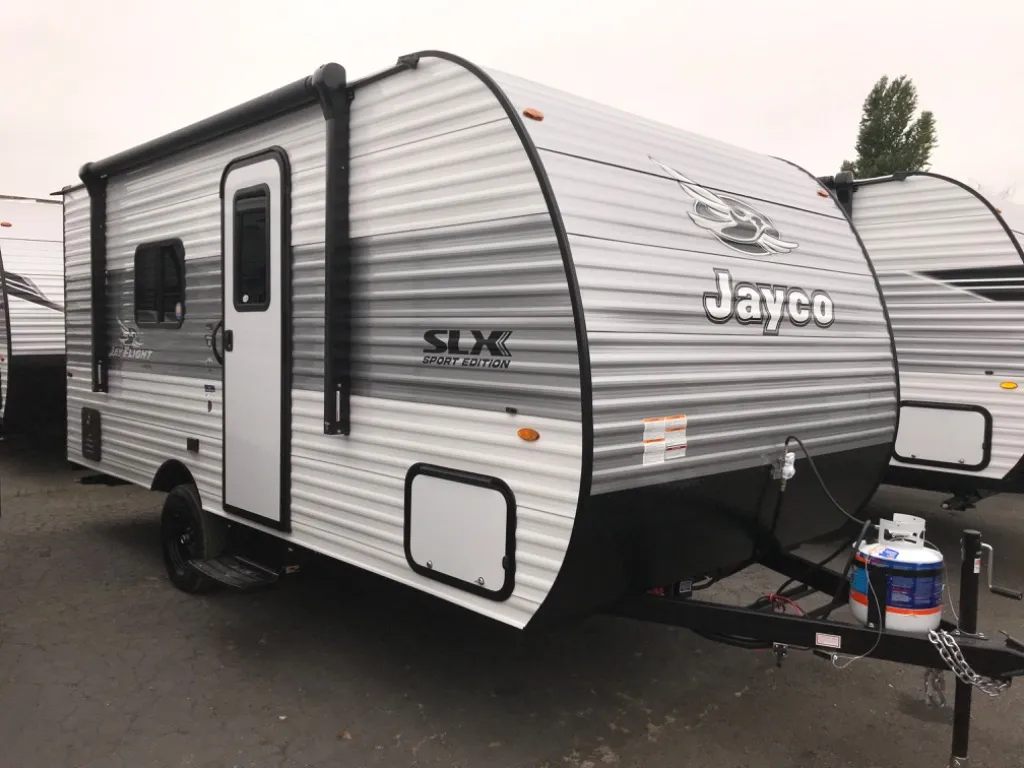
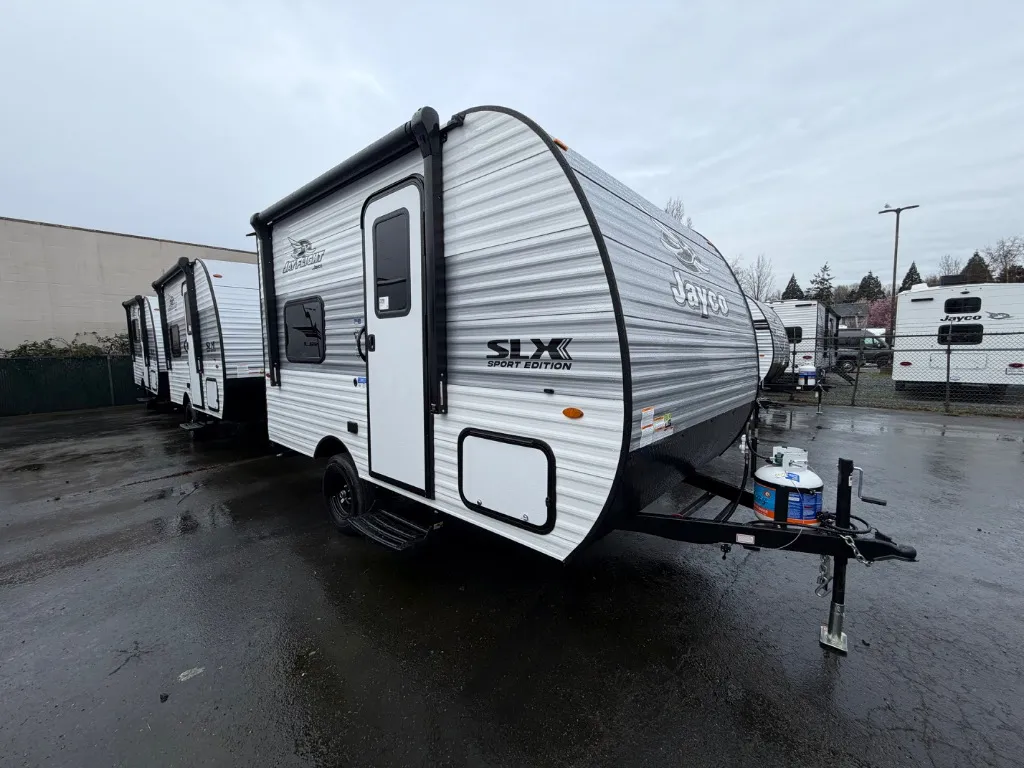
Browse new Jayco floorplans on our lot if your current rig's seals are beyond a reasonable service investment, but for most rigs, the service items below are the right first call.
The AC filter gap comes first. Standard RV AC filters are typically MERV 6, designed to catch dust and pollen. PM2.5 from wildfire smoke is measured in micrometers, and MERV 6 lets most of it slip through, so you don't get real protection. The EPA recommends MERV 13 for smoke events. Not every RV AC unit can run a MERV 13 filter without airflow problems, so this is a 'check your spec sheet or ask us' item rather than a 'just swap it in' one. A filter rated higher than the blower supports can restrict airflow and cause the evaporator coil to ice over.
Slide-out seals are the sneaky point of entry. When the slide is extended, the seal has to compress against the RV body on all sides. A seal that's dried, hardened, or torn from a tight site no longer creates that compression. Smoke, dust, and eventually moisture find the path of least resistance.
Schedule a Smoke-Season RV Inspection
The Honest Tradeoff of Sealing Up Your RV
Sealing up your rig genuinely cuts smoke infiltration and that's the real upside, but the same move forces the AC to work harder in a closed cabin and lets humidity build faster without fresh-air exchange, so the plain truth is that protection and comfort pull against each other here.
On shore power, this is manageable. The wall hookup covers the extra draw.
Dry-camping at a forest campsite with a generator or battery bank is a different calculation, and you'll need to weigh power budget against air quality. Running the AC fan without cycling, at low speed, keeps air moving through the filter more steadily than letting the thermostat switch it on and off. For sustained smoke exposure, that's the better play. It draws more power, and that's a genuine tradeoff we can't engineer around.
For families with young children or anyone with respiratory sensitivities, the AQI threshold to make that call is lower. The American Academy of Pediatrics recommends keeping children with asthma indoors above AQI 100. In a sealed, filtered RV, you're building exactly that protective environment. Plan your power accordingly.
The slide-out decision is worth noting too. In smoky conditions, keeping slides retracted when you're not actively using that extra space reduces the seal perimeter you're trying to protect and simplifies your smoke mitigation, one less seam to worry about.
| Item | Why It Matters in a Smoke Event |
|---|---|
| AC filter (MERV 6 stock) | Lets PM2.5 smoke particles pass through; upgrade to MERV 13 if unit supports it |
| Roof vent gasket | Cracked foam lets fine particulate infiltrate even when lid is closed |
| Slide-out seals | Dried or torn seals create a direct path for smoke along the full slide perimeter |
| Fresh-air intake mode | Draws smoky outside air directly into cabin; switch to recirculation |
| Storage bay seals | Smoke in compartments can seep into living area through wall penetrations |
| Post-trip filter | Trapped smoke particles off-gas inside a sealed stored rig; replace before storage |
A Print-and-Go Recap for Your Next Trip
The recap below condenses the full checklist into three quick lists you can keep in the glovebox or campsite binder, one for before you leave, one for when smoke rolls into camp, and one for after the trip before you store the rig.
Shopping a pre-owned rig? Browse used units on our lot and ask our team about seal condition and AC filter type before you commit to a purchase.
Before you leave Kent when smoke is in the forecast:
- Replace AC filter if it hasn't been changed in the last 30 days during smoke season.
- Inspect and close all roof vents; check gaskets by feel.
- Run your hand along slide-out seals and door frames; note any gaps.
- Pack a portable HEPA unit and a PM2.5 indoor monitor.
- Check AQI for your destination before departure and set a threshold for when you'd head home.
At camp when smoke moves in:
- Close all roof vents and windows immediately.
- Switch AC to recirculation instead of fresh-air intake.
- Run AC fan nonstop (not on thermostat cycle) to keep air moving through the filter.
- Use the portable HEPA purifier in the bedroom overnight.
- Check your indoor PM2.5 monitor. If indoor AQI climbs above 100, that's your signal to add more filtration or leave.
After a smoky trip, before you store:
- Replace AC filter.
- Damp-wipe all interior surfaces, including return grilles.
- HEPA-vacuum upholstery and carpet.
- Schedule a service inspection if seals showed any gaps.
Book your post-season service at Valley RV Supercenter in Kent
Frequently Asked Questions
Does running my RV air conditioner filter out wildfire smoke?
It depends on your filter. Most RV air conditioners come from the factory with MERV 6 filters, which capture dust and pollen well but let fine wildfire smoke particles (PM2.5) pass through. The EPA recommends MERV 13 filtration for smoke events. Before upgrading, check your AC unit's specification: a filter rated higher than the unit supports can restrict airflow and cause the evaporator coil to ice. Our service team can confirm compatibility for your specific unit.
Should I keep my roof vents open or closed when there's smoke outside?
Close them completely. Even with the lid closed, a worn or cracked gasket can allow fine particulate smoke to infiltrate the cabin. During active smoke conditions, close and latch all roof vents and inspect the foam gasket around each vent base. If the gasket doesn't compress and recover when you press it, it's time for a replacement, and that's a straightforward service item we handle regularly.