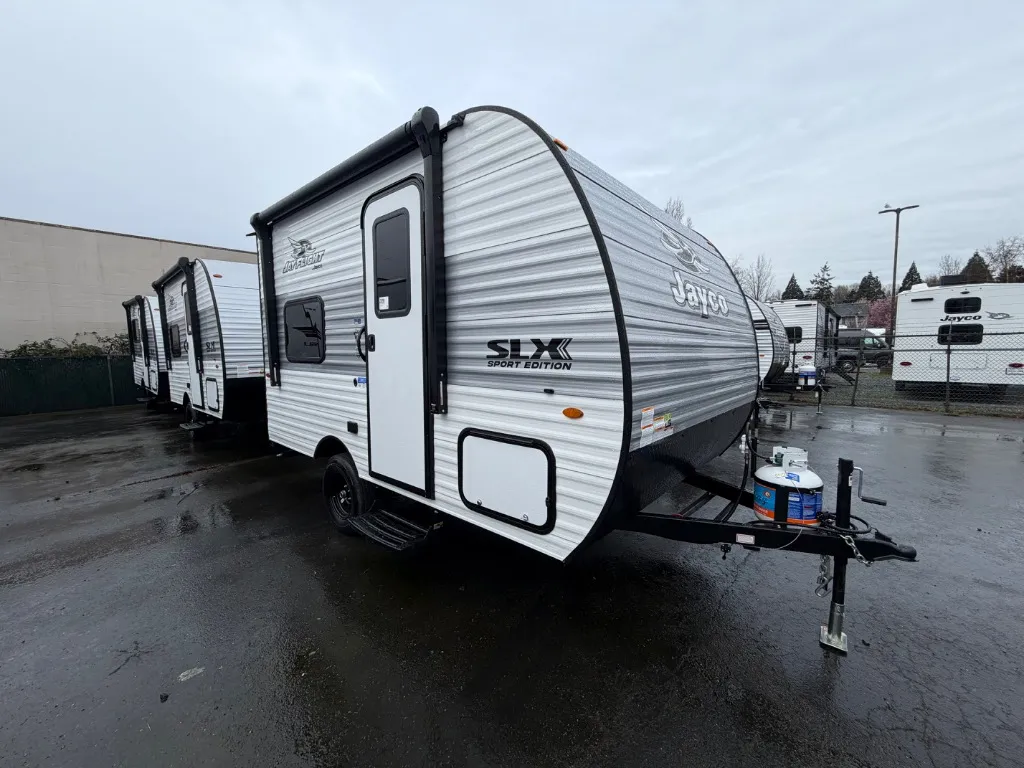

Best RV Floorplans for Families, Couples, and Solo Travelers in the Seattle–Tacoma Area
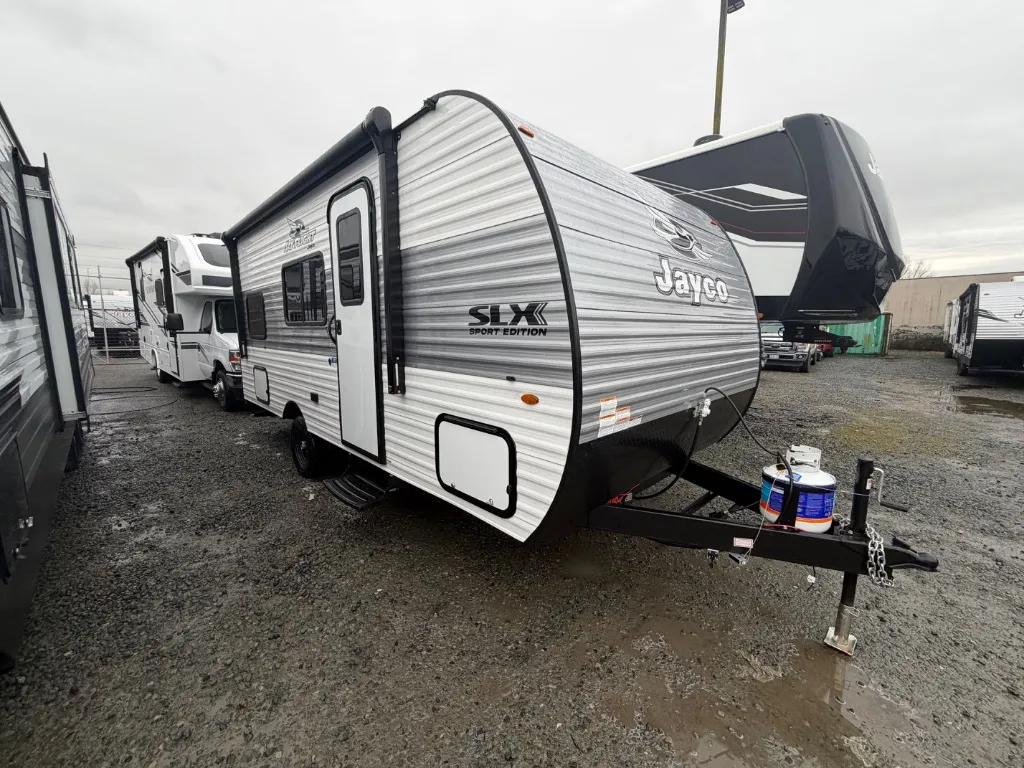
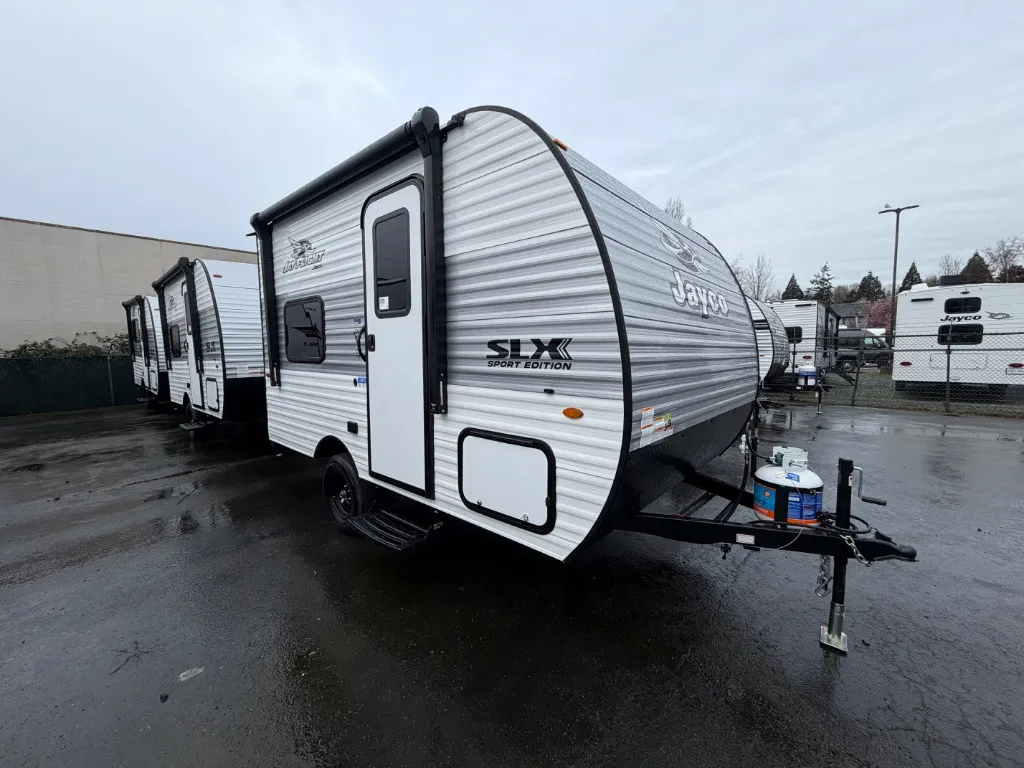
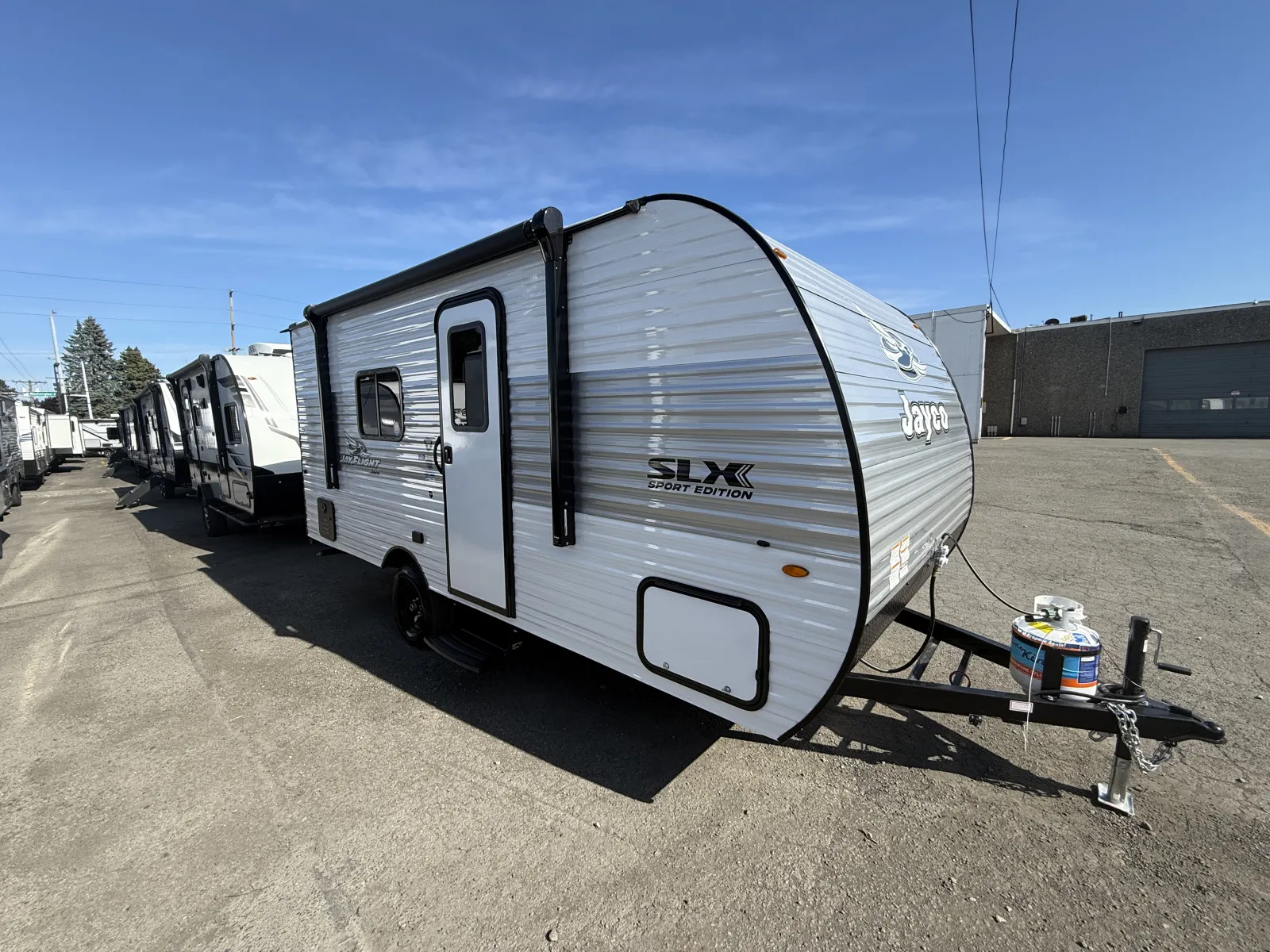
The right floorplan for a Puget Sound camping trip isn't just about sleeping capacity. What matters more is whether your rig fits the campsite at Mount Rainier, whether your half-ton truck can safely pull it up SR-18 to Snoqualmie Pass, and whether the layout still feels livable when October rain sets in for three straight days. The single best family floorplan we'd point to right now is the 2026 Jay-Flight SLX bunkhouse range, but that answer assumes a family of four or more with a capable tow vehicle. Your situation may land you somewhere else on this list entirely.
We break it down like this.
Our Ranked Picks at a Glance
| Rank | Pick | Best For | Standout Spec |
|---|---|---|---|
| 1 | Jay-Flight SLX (bunkhouse) | Families of 4-6 | Up to 10 sleepers; dual-axle dual-entry models fit most campground pull-throughs |
| 2 | Eagle HT Fifth Wheel | Couples and small families upgrading from a trailer | Length ranges from 29'2" to 36'6"; half-ton towable options starting at 8,120 lbs UVW |
| 3 | Melbourne Class C | Couples and families who want motorized flexibility | Mercedes-Benz 3500 chassis with 2.0L Twin Turbo diesel (211 HP, 332 ft-lb torque) |
| 4 | Swift Class B | Solo travelers and camping couples | 20'11" length, fits Washington State Ferry vehicle decks and tight trailhead lots |
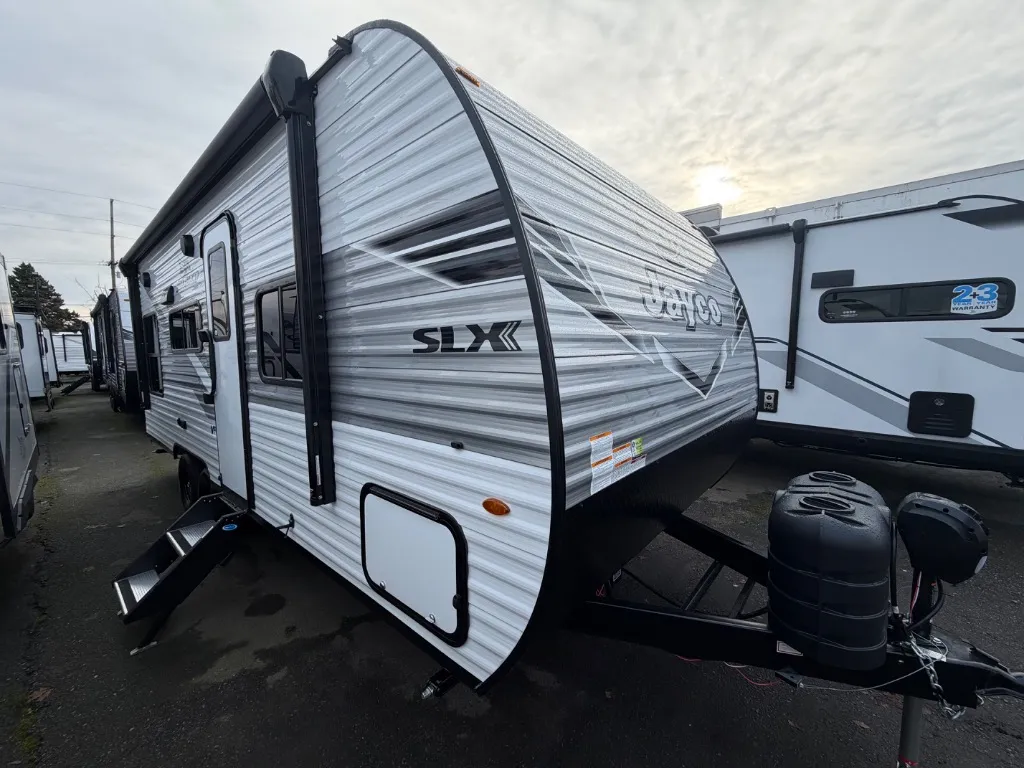
The Jay-Flight SLX Is the Family Bunkhouse That Actually Fits PNW Campsites
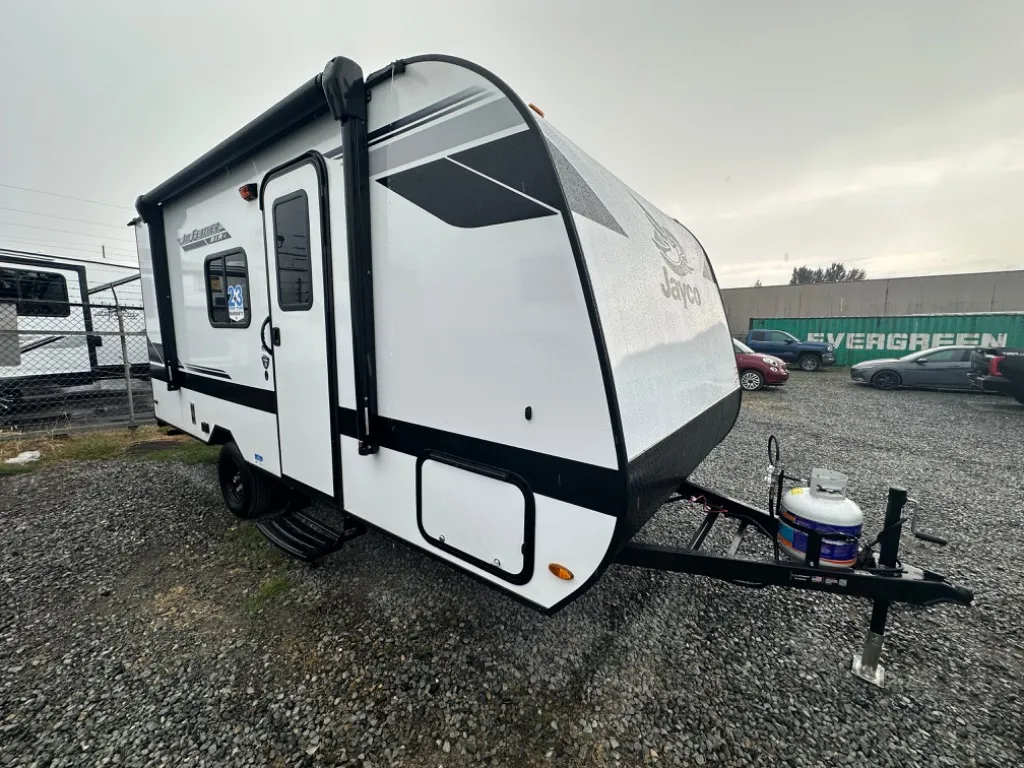
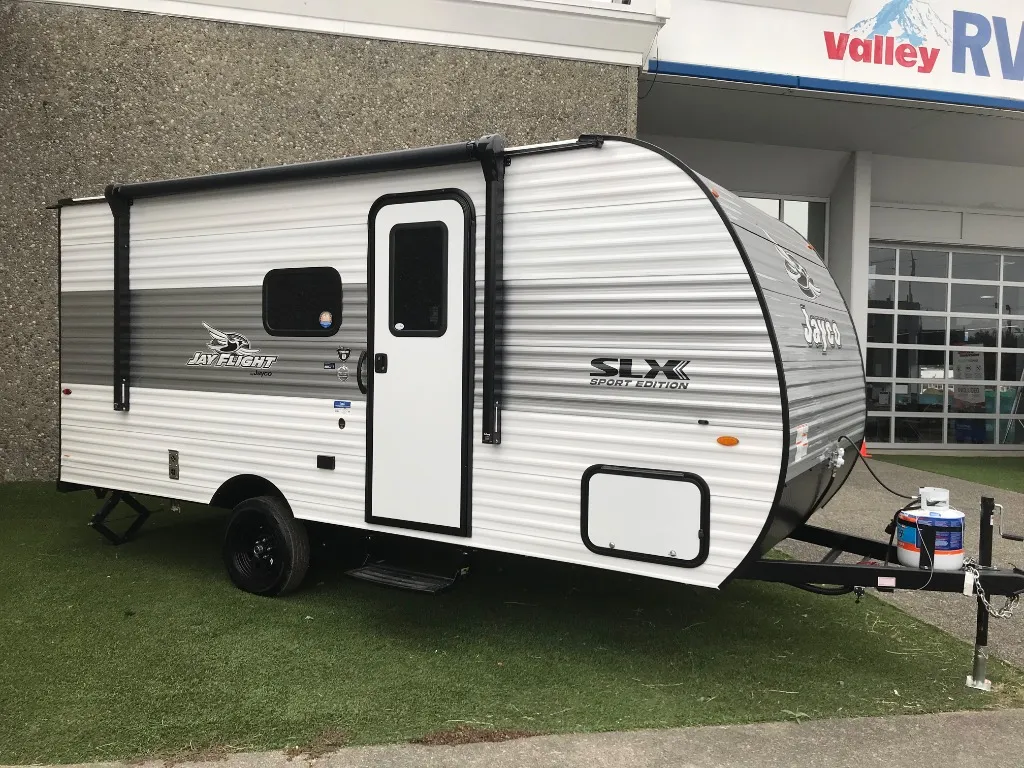
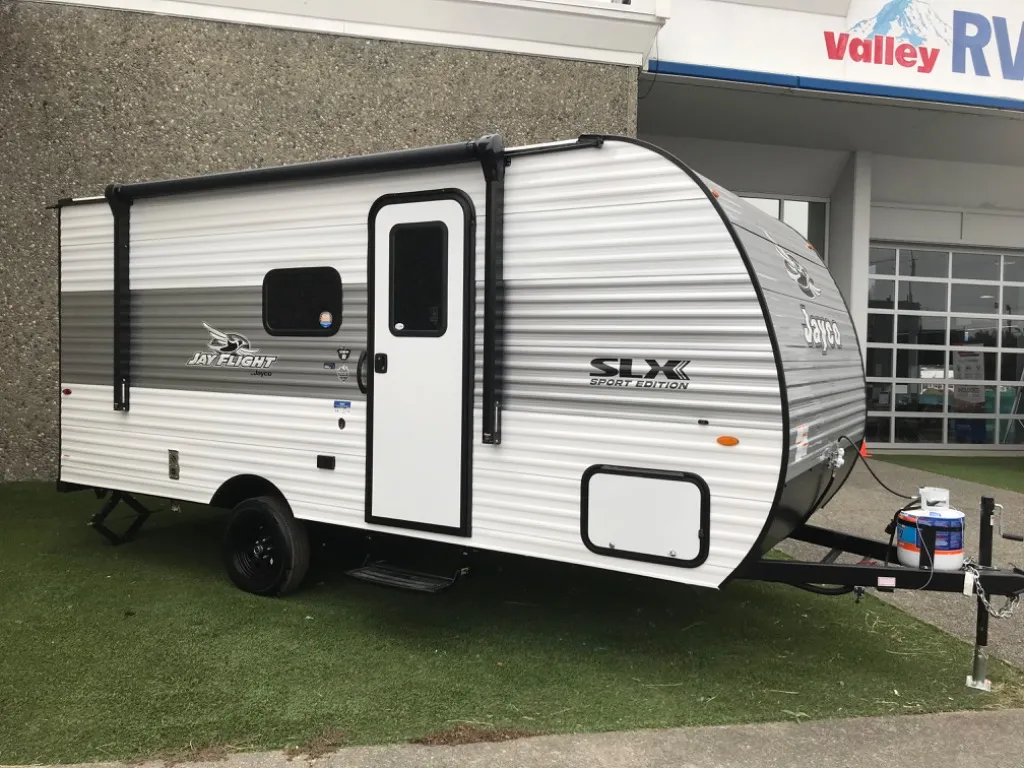
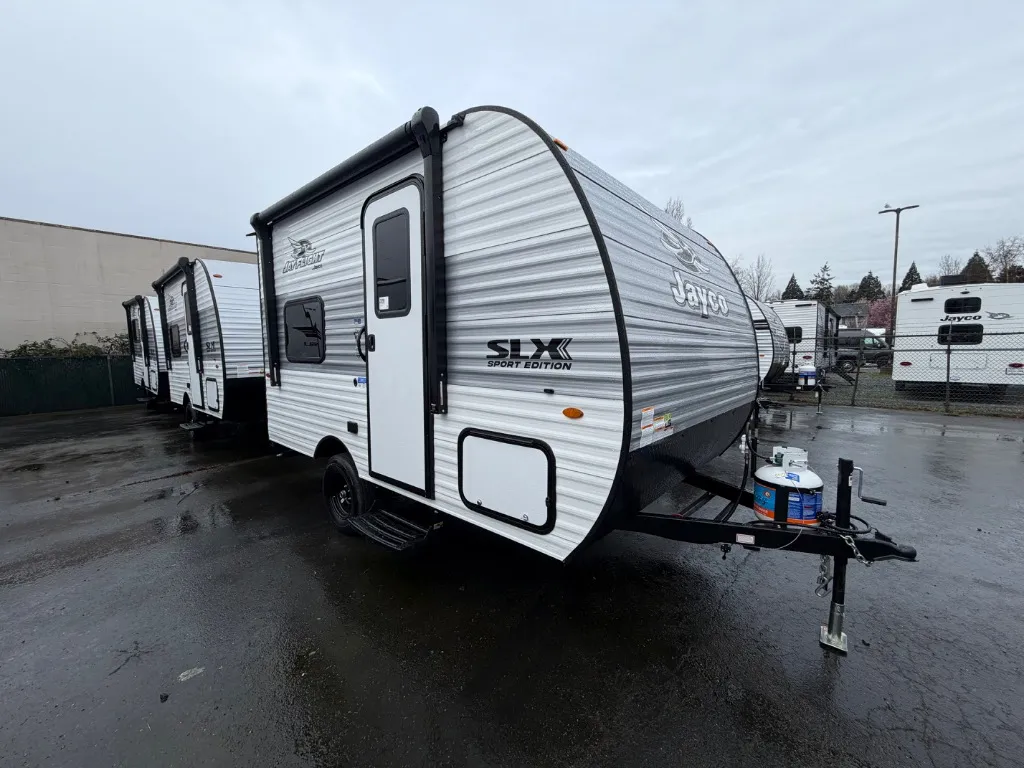
Jayco's Jay-Flight SLX lineup runs from 17'6" on the compact end all the way to 40'4" for the largest bunkhouse configurations, and that range matters here more than it does in, say, the Southwest. Many sites at campgrounds in the Cascades and on the Olympic Peninsula have length caps or tight back-in setups where a 42-foot rig simply won't go. The sweet spot for this region is the dual-axle mid-size bunkhouse layouts in the 30-to-35-foot range. You get enough room for four to six people, two sets of bunks, and a real bathroom, while still clearing the length limits you'll actually encounter. Jayco lists the SLX bunkhouse range as sleeping up to 10 people in its largest configurations.
The other thing that makes this work for Seattle-area families is the enclosed and heated underbelly. PNW shoulder-season camping (think late September at Dash Point State Park or a spring weekend near Lake Sammamish) means overnight temperatures that dip toward the low 40s before campground season officially ends. Plumbing that isn't protected will remind you of that. The SLX has Jayco's Magnum Truss roof system and laminated fiberglass construction, which resists the sustained moisture that's genuinely different from what a desert-built rig is optimized for.
A dual-axle bunkhouse in this range does carry a real tradeoff, since it needs a three-quarter-ton truck to tow it comfortably. If you're pulling with a half-ton, verify your specific tow vehicle's ratings and the unit's door-jamb label (properly equipped) before you commit to any configuration above 6,000 lbs dry weight. That check matters more on SR-167 hill grades and on the I-90 climb than it does on a flat highway.
The Eagle HT Is the Couples' Fifth Wheel That Doesn't Demand a Heavy-Duty Truck
Fifth-wheel comfort (the separate bedroom, the walk-in closet layout, the residential feel) usually comes bundled with an assumption that you need a dually pickup, and that assumption stops a lot of couples short. The Eagle HT is Jayco's direct answer to that. Jayco lists eight Eagle HT floorplans ranging from 29'2" to 36'6" in length, with unloaded vehicle weights starting at 8,120 lbs on the shorter plans. Certain configurations can be towed by a properly equipped half-ton truck, per Jayco's published specs, though you should verify your specific truck's ratings and the unit's door-jamb label before hooking up.
That shorter length range is also meaningful for this market specifically. The 360-degree turnaround on a tight back-in site at a Cascade-area campground is a meaningfully different challenge than pulling into a spacious RV resort. An 8,120-lb, 29'2" fifth wheel maneuvers differently than a 42-foot flagship. Couples who want extended stays (a long Memorial Day through Labor Day season is the reward for getting through a wet winter here) will appreciate the residential-quality master suite layouts, which Jayco builds with a king-size bed and walk-in closet in several Eagle HT configurations.
A fifth wheel requires a pickup truck, period. If your daily driver is an SUV or a car, this one isn't for you regardless of where you camp.
Pros and Cons of Going Motorized: The Melbourne Class C
| Pros | Cons |
|---|---|
| No tow vehicle required; drives like a large van | Higher upfront commitment vs. a towable |
| Mercedes-Benz 3500 chassis (211 HP Twin Turbo diesel) is proven on mountain grades | You bring your home with you everywhere, including quick grocery runs |
| 4,000W LP generator standard; usable without shore power | Campsite access can be limited if you also tow a dinghy vehicle |
| Overhead bunk rated to 750 lbs (300 lbs over industry standard, per Jayco) adds flex sleeping | Diesel fuel is less available than gas on some rural Washington corridors |
| MBUX infotainment with Apple CarPlay standard | Smaller floorplan than a comparable fifth wheel at the same length |
The 2026 Melbourne runs on a Mercedes-Benz 3500 chassis with a 2.0L inline four-cylinder Twin Turbo diesel producing 211 HP and 332 ft-lb of torque. That torque figure matters on passes. I-90 eastbound at Snoqualmie Pass gains roughly 3,000 feet of elevation in a short stretch, and the difference between a gas engine that's working hard and a diesel that's pulling steadily shows up in your engine temperature, your fuel consumption, and your confidence on a loaded rig.
The 4,000W LP generator means you're not locked to hookup sites. The generator opens up a wider inventory of Cascade-area primitive sites in summer.
The Melbourne fits couples who want a proper separation between sleeping and living (the front cab-over area or overhead bunk handles overflow guests), and families where the overhead bunk's 750-lb capacity actually gets used. The Melbourne is also easier for someone who hasn't towed before. You learn one vehicle, not two.
The Swift Class B Is the Rig That Goes Everywhere a Car Goes
The Swift is the solo traveler's answer here, and for a specific kind of Pacific Northwest adventurer it's the correct one, though it stops being the answer the moment you need to seat a whole family. At 20'11" long, the 2026 Jayco Swift fits on Washington State Ferry vehicle decks without triggering the oversize surcharge that applies to longer rigs, fits in a standard public-campground back-in site anywhere in the state, and parks in most urban lots if you need to run into Tacoma or Seattle for a day. The Swift runs on a RAM ProMaster 3500 chassis with a 3.6L V6 producing 276 HP and 250 ft-lb of torque, with a GVWR of 9,350 lbs.
Three floorplans are available for 2026, all at the same 20'11" length: the 20T (twin beds that convert to a king, kitchen forward, wet bath rear), the 20A (rear kitchen and fold-out sofa bed, wet bath midship), and the 20E (rear gear garage for bikes and kayaks). The Truma Combi furnace and hot water system runs on propane, electricity, or both, which matters for boondocking without shore power. Jayco also includes solar prep standard, and an optional Li package adds a 48V, 210-amp-hour smart lithium battery system.
The tradeoff here is blunt. Two people camping for a week in a 20-foot van requires a high tolerance for proximity. It's a fantastic solo rig and a workable couple's rig for people who camp actively and sleep well. It's not a full-family solution, and no amount of clever cabinetry changes the square footage.
The Swift is the right answer if you're a solo traveler or couple who wants to board the Bainbridge Island ferry, spend two nights on the Olympic Peninsula, and drive back without once thinking about where to park.