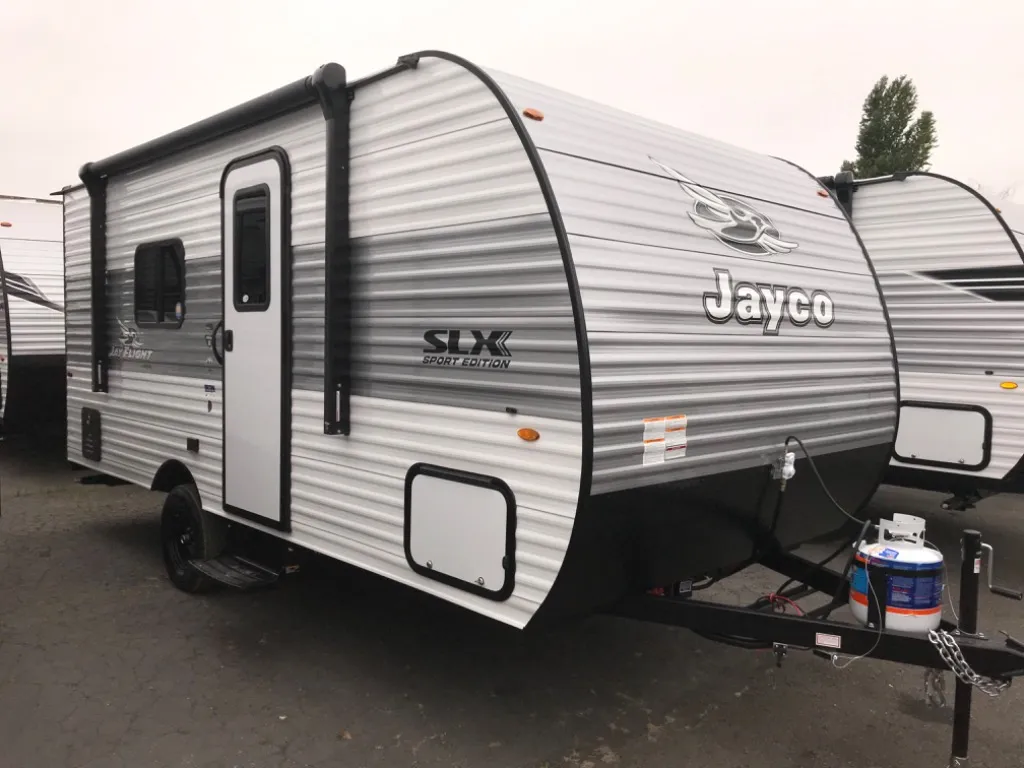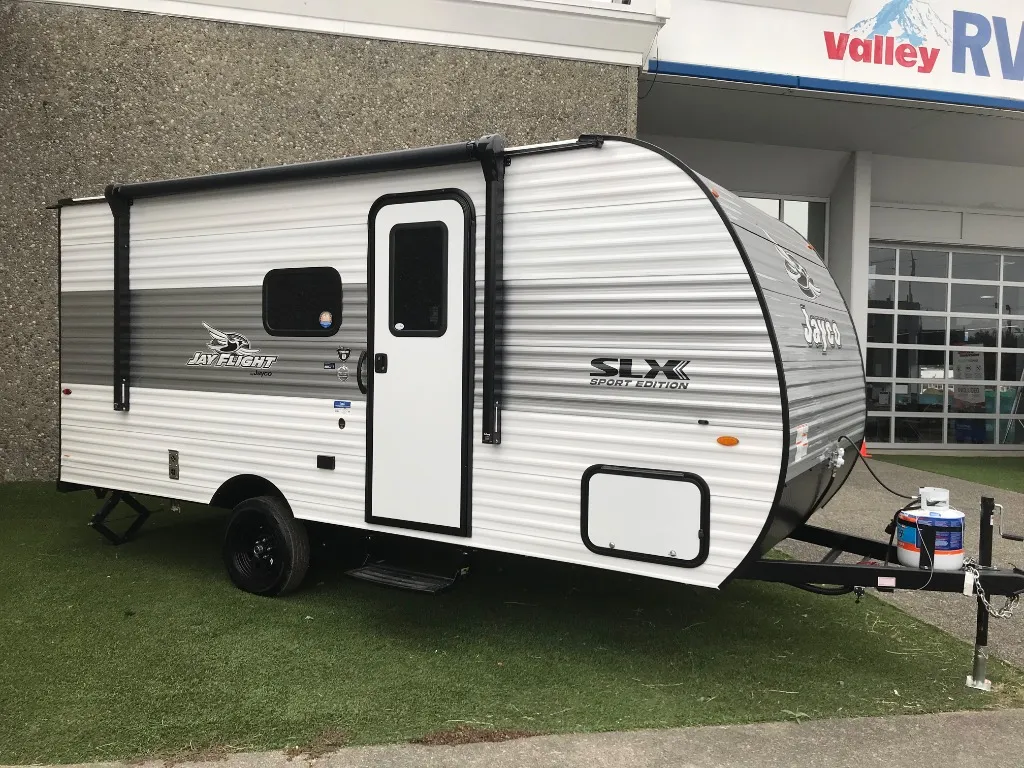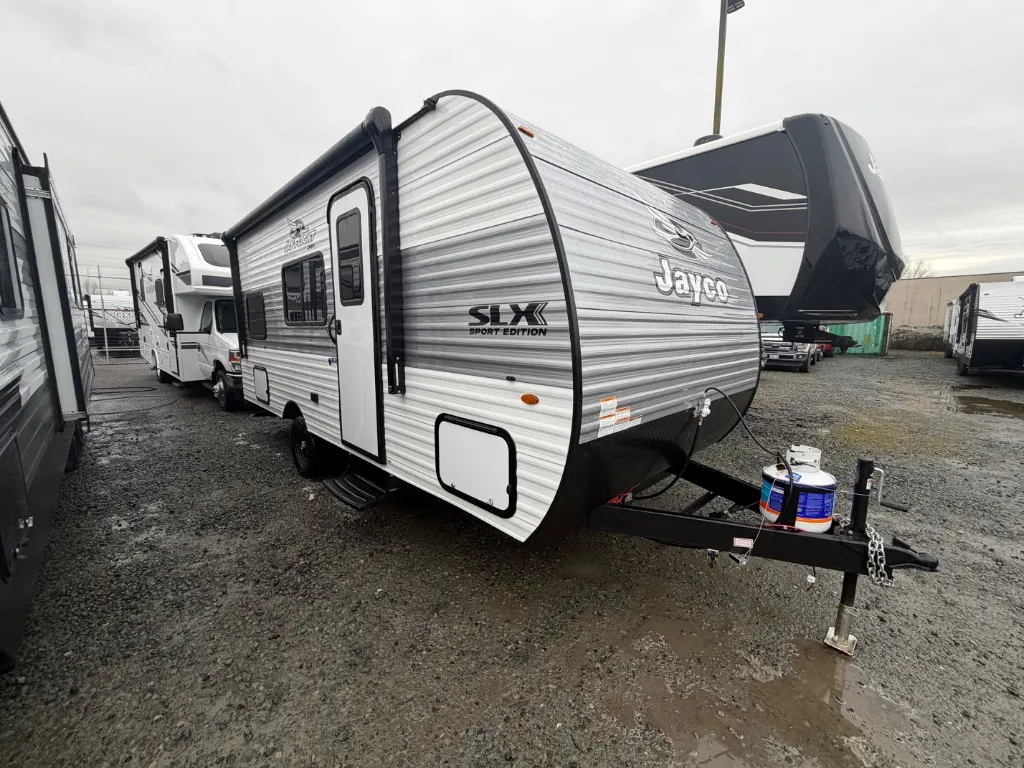

Fall RV Service Appointments: Roofs, Tires, Brakes, and Plumbing
The Pacific Northwest doesn't give you a dramatic hard-freeze warning. It just rains for six weeks, then one night in late October the temperature drops to 29 degrees and you wake up to cracked P-traps and a roof sealant seam that's been letting moisture in since Labor Day. Our service team spends every autumn here in Kent working backward from that exact scenario, and the good news is that it's almost always preventable.
Fall RV service isn't one thing. You're really looking at four separate systems, each with its own failure mode and its own correct response, and the right approach for your rig depends on what it's built with, how old the tires are, and what kind of brakes sit on the axles. We'll match the service to your rig.
Book your fall service appointment at Valley RV Supercenter
- Roof: EPDM rubber needs UV protectant and lap-sealant inspection every 90 days; TPO focuses on seam integrity, not membrane conditioning; fiberglass needs stress-crack checks around penetrations
- Tires: Major manufacturers recommend replacement at 5-6 years regardless of tread; read the DOT date code on the sidewall to know exactly where you stand
- Brakes: Standard electric drum brakes need adjustment roughly every 3,000 miles or once per season; the electric magnet check is the step most owners skip
- Plumbing: For Puget Sound conditions, a hybrid approach (blow out with compressed air at no more than 30 PSI, then add RV antifreeze to traps and the pump) gives the most reliable freeze protection
- Timing: Book your appointment now; Snoqualmie Pass can see its first snowfall as early as October, and once the cold arrives the service calendar fills fast
What Actually Determines Your Fall Service Needs?
Your rig's age, roof material, brake type, and how long it'll sit idle are the four variables that drive every decision in this guide. A three-year-old fifth wheel with a TPO roof and disc brakes has almost nothing in common, from a service standpoint, with a ten-year-old travel trailer running EPDM and standard electric drums. Start with those variables instead of a one-size list, and a generic checklist becomes a plan that truly protects your investment.
| System | Key Variable | What It Determines | Main Risk If Skipped |
|---|---|---|---|
| Roof | Material type (EPDM / TPO / fiberglass) | Which sealant product and how often to condition | Water intrusion behind ceiling panels |
| Tires | DOT manufacture date (4-digit sidewall code) | Whether age-based replacement is due | Sidewall blowout from UV and ozone degradation |
| Brakes | Electric drum vs. disc; self-adjusting vs. standard | Whether manual star-adjuster service is needed | Longer stopping distances and increased sway risk |
| Plumbing | System complexity; outdoor shower or ice maker present | Method selection (air, antifreeze, or hybrid) | Cracked pipes, split P-traps, water-pump damage |
The Roof: Material First, Then Method
Keystone RV's published maintenance guidance specifies inspecting seams, joints, and attachments at least every 90 days, and resealing as needed using the same sealant type as originally installed. That interval matters because our wet season starts fast. A sealant gap that looks like a hairline in August is a water pathway by November.
The wrong product on the wrong roof material causes damage instead of protection, so the first step is identifying what you've got.
EPDM rubber roofs are the most common material on the road. They need a dedicated rubber-safe UV protectant applied after washing, typically every three to six months. EPDM oxidizes over time, throwing off the chalky residue that streaks black down the sidewalls. Fall triggers a conditioning pass before storage.
TPO roofs are inherently more UV-resistant, so the membrane itself doesn't need aggressive conditioning. Put your effort into the seam areas and any penetrations (vents, air conditioners, antennas). TPO uses heat-welded seams that beat adhesive systems for reliability, but the sealant around those penetrations still needs quarterly inspection and replacement at the first sign of cracking.
Fiberglass roofs fail differently. When the RV frame flexes on the road, a rigid roof develops stress points at the edges and around every penetration, and those cracks don't always announce themselves with the visible swelling rubber gives you. Water can travel a long way inside a fiberglass roof assembly before it shows up as a stain on your ceiling. Press gently around every vent and skylight perimeter, and any softness in the decking below points to standing water damage that needs professional attention before the rig is parked for winter.
Tires and Brakes: The Two Systems Most Owners Under-Check
Tires and brakes are the two systems that quietly age whether you drive the rig or leave it parked, so tread depth alone won't tell you a tire's roadworthy and a brake that felt fine in spring can drift out of adjustment by fall. Age, UV, and mileage keep working the whole time.
Tread wear is almost never what kills an RV tire; age and UV oxidation do, whether the rig is moving or parked. The clock keeps running.
Major manufacturers including Goodyear, Michelin, Carlisle, and Maxxis recommend replacing trailer tires at five to six years regardless of appearance or remaining tread depth. The DOT date code on your tire's sidewall tells you exactly when your tires were made. Find the four-digit code stamped near the bead (it reads week then year; a code reading "2622" means the 26th week of 2022). If your tires are approaching or past that five-to-six-year window, fall's the right time to handle it before winter storage adds another season of oxidation to their age.
Sidewall cracks less than 1/32 inch deep are generally acceptable to keep using, while cracks deeper than 2/32 inch mean the tire needs replacing before the next trip. PNW cloud cover doesn't meaningfully protect tires from UV degradation, so cover them with UV-blocking tire covers whenever the rig sits outdoors for more than a week or two.
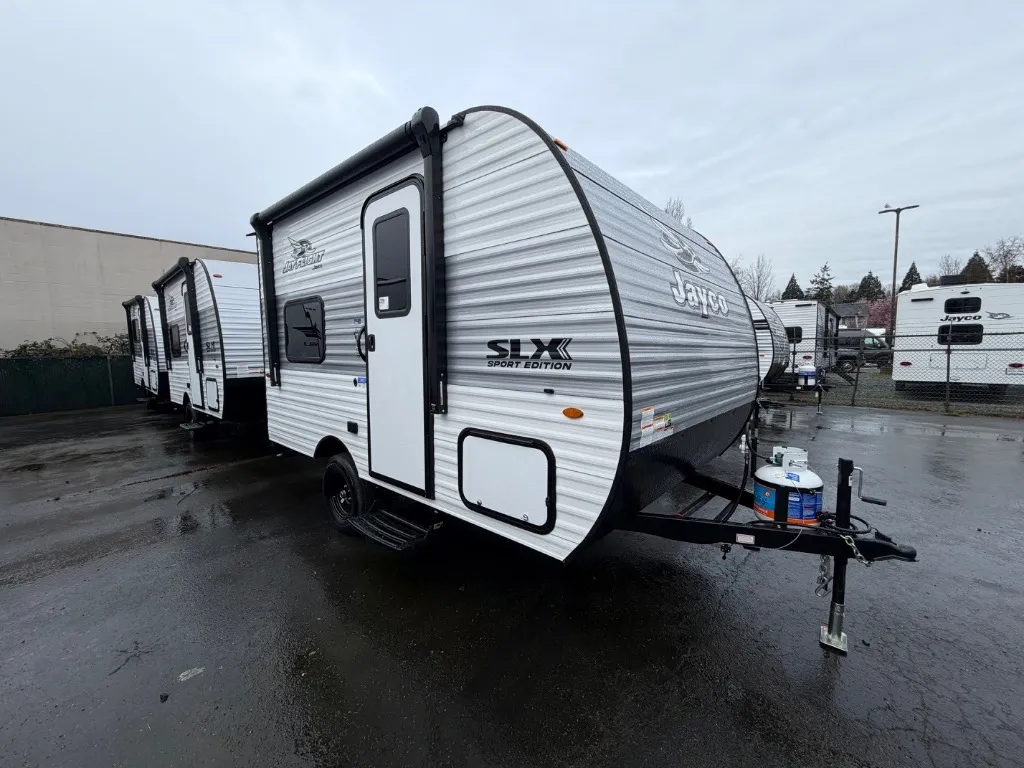
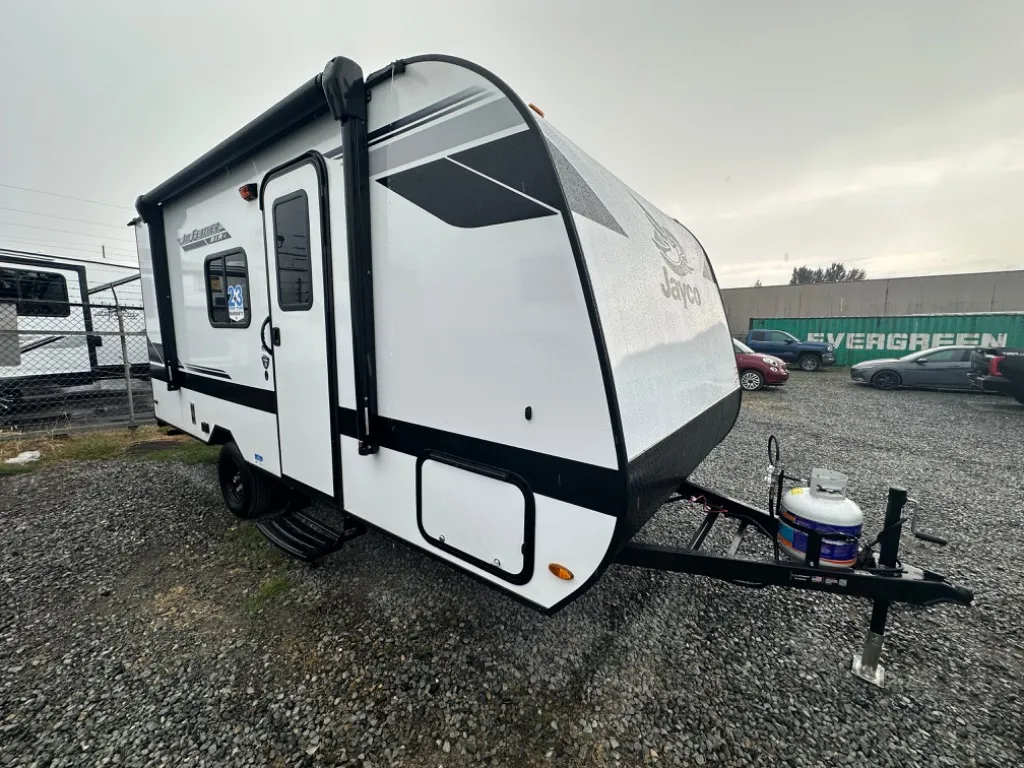
On brakes, most Jayco towables run standard electric drum brakes. According to Dexter, the industry's leading axle manufacturer, standard electric drum brakes need adjustment approximately every 3,000 miles or at least once per season. The star-adjuster is accessible through the slot on the back side of the hub. The step that's easy to skip is the magnet check. Activate the brake controller override at full gain while someone listens near each drum. A soft click or hum confirms the electromagnet is engaging. No response means a closer inspection before the rig sits for months.
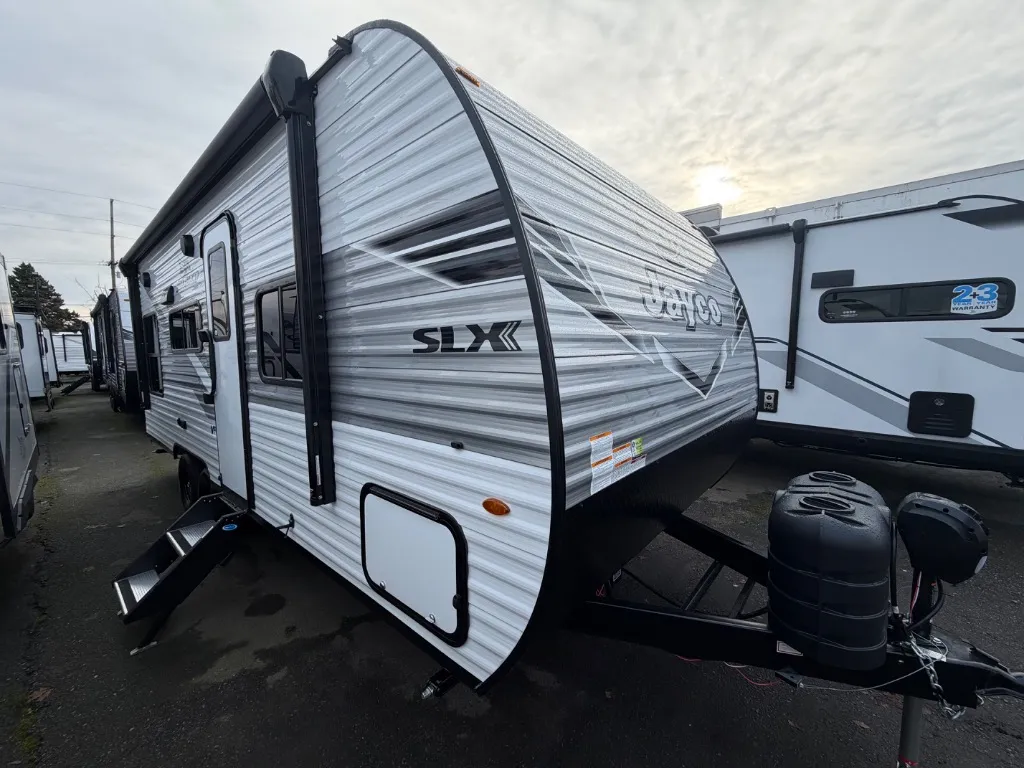
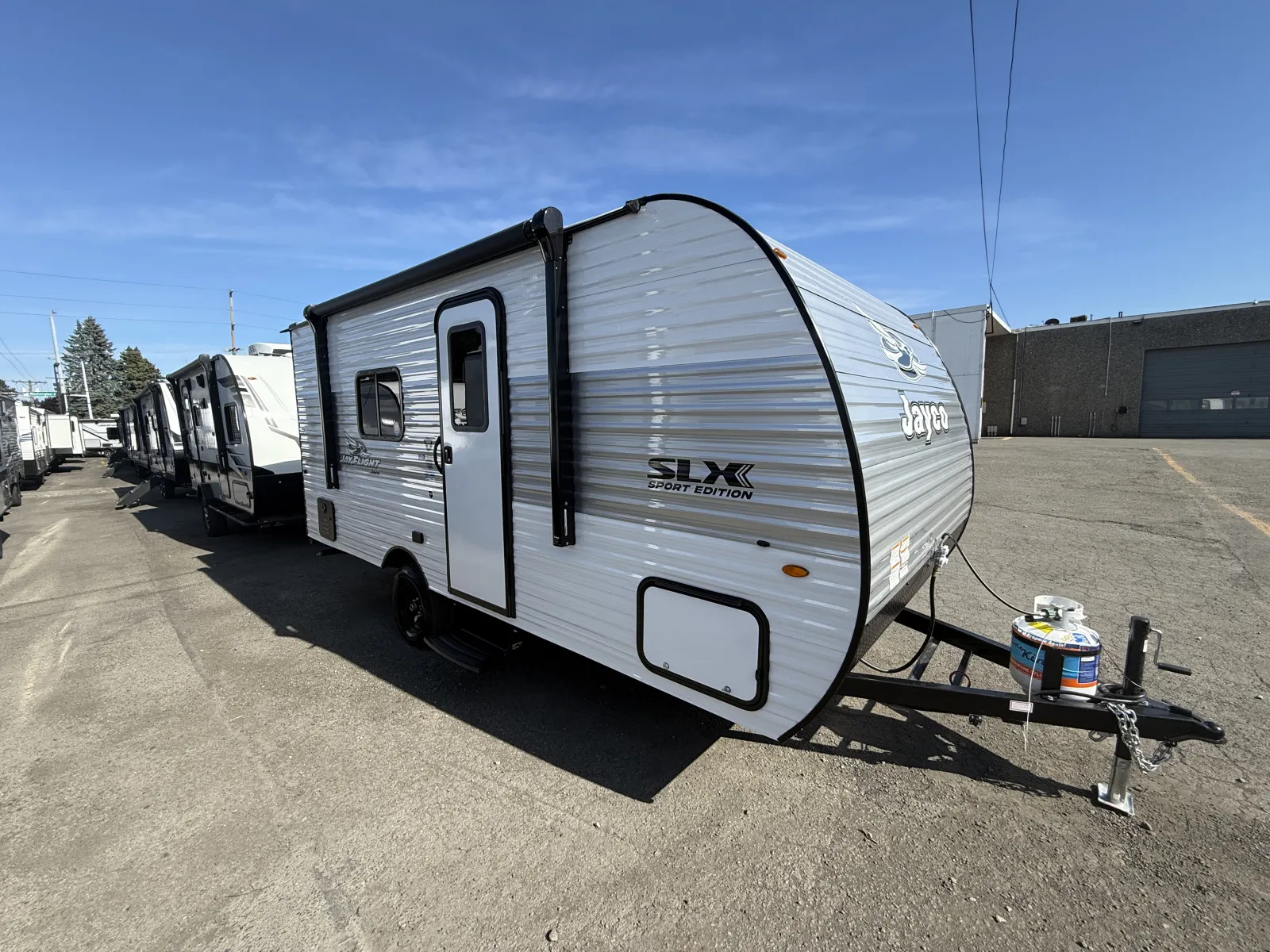
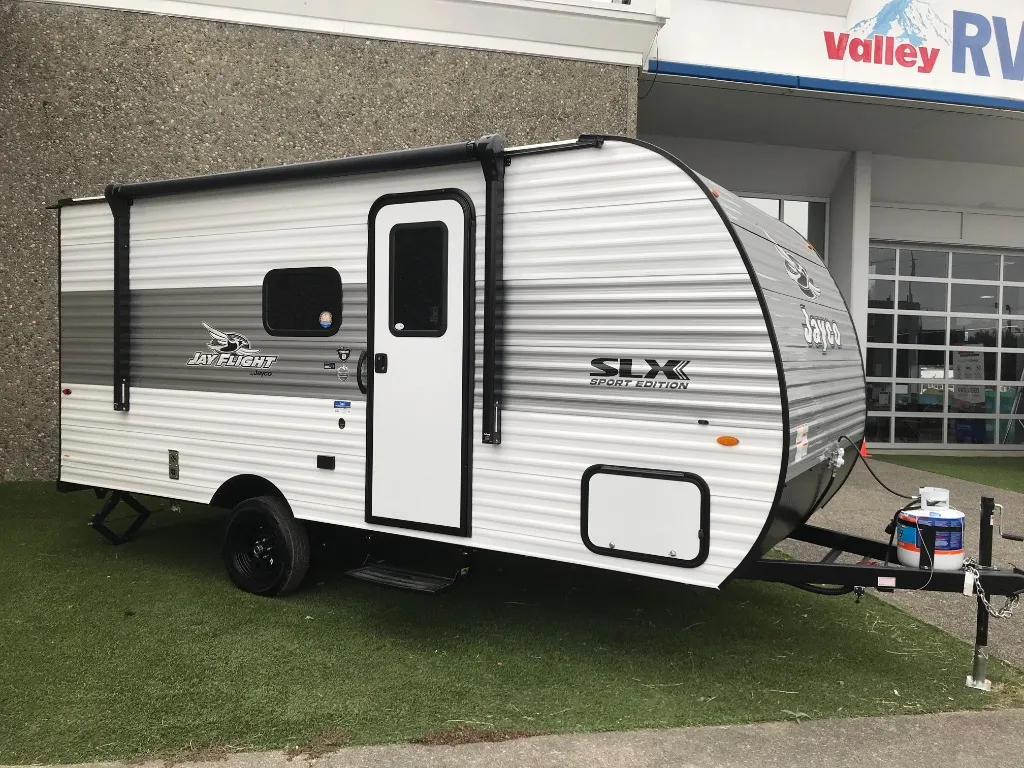
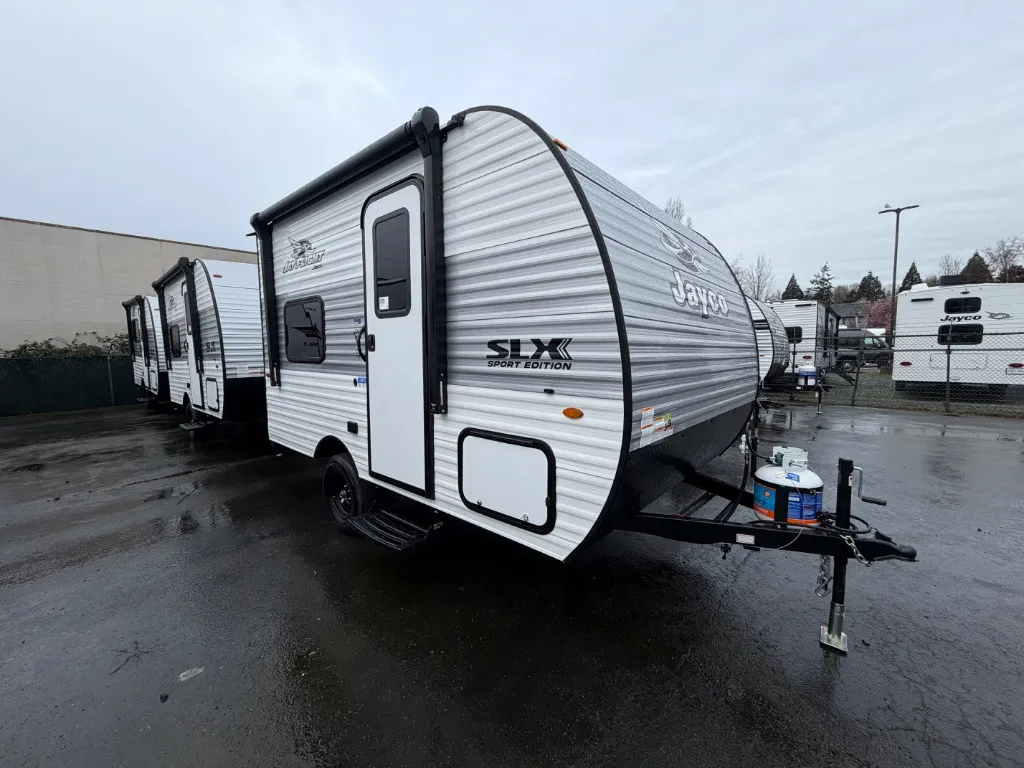
Browse Jayco Jay-Flight travel trailers at Valley RV Supercenter
Explore the Jayco Jay-Feather lineup
Also inspect the wiring at each brake assembly for loose or corroded connectors. Corrosion causes intermittent brake signals, which produces uneven braking and accelerated sway risk (particularly relevant on SR-167, where trailer traffic runs at highway speeds through the Kent Valley).
Disc-brake-equipped units (found on some fifth wheels and motorhomes) don't require the star-adjuster service, but pad thickness and rotor surface condition still need a visual inspection. They're easier to check without disassembly, which is one genuine advantage disc systems offer.
- Check the DOT manufacture date before assuming tires are roadworthy based on tread alone
- Activate the brake controller override and listen for the electromagnet click at each drum
- Inspect brake wiring connectors for corrosion, especially at the seven-pin plug and at each drum assembly
- Cover stored tires with UV-blocking covers to slow ozone and UV degradation
- Always verify your specific tow vehicle's ratings and the unit's door-jamb label before the towing season; "properly equipped" is the operative phrase in every towing spec
Plumbing Winterization for Puget Sound Conditions
For Puget Sound conditions, a hybrid method gives you the most reliable freeze protection, because compressed air alone is faster and leaves nothing pink behind but can't guarantee zero residual water in every low point, every P-trap, and the pump body, while antifreeze alone is slower and leaves pink residue to flush out in spring.
Kent sits in the Green River valley south of Seattle. Temperatures here mostly stay above freezing but can snap below 28 degrees for several nights with no warning, so blending the two methods covers that gap.
Keystone RV's published winterization guidance specifies a maximum of 30 PSI when using compressed air through the city water inlet. Exceeding that limit risks damaging fittings. Work the sequence in this order.
- Drain the fresh tank completely and open all low-point drains.
- Bypass the water heater using the two- or three-valve bypass on your rig. Bypassing before adding antifreeze prevents you from filling the heater tank unnecessarily.
- Blow out each faucet line individually (cold, then hot) until only air comes out. Don't skip the outdoor shower or toilet supply line.
- Pour approximately one cup of non-toxic RV antifreeze (pink, non-automotive formulation) into every drain to protect the P-traps, and run a small amount through the water pump to protect the pump seals.
- Drain and close the black and gray tanks. If equipped with a black tank flush line, blow it out as a dedicated step.
The outdoor shower is the fixture that's easiest to forget. It gets no insulation benefit from the rig's interior warmth and sits directly exposed to ambient temperatures. Blow it out every single time.
If your rig has a residential refrigerator with an ice maker line, drain that line rather than running antifreeze through it, per manufacturer guidance.
Let our Kent service team handle fall plumbing winterization
Match the Gear to How You Actually Camp
How you camp decides how much of this list you tackle right now, and owners split into two clear groups, full-season campers who park the rig from September to April and shoulder-season folks who keep rolling into November at lower elevations.
Full-season campers need the complete four-system service done in one visit. Every week the rig sits uninspected after October is a week Pacific Northwest rain works on whatever isn't sealed or purged.
Shoulder-season campers still going through November at lower elevations can defer plumbing winterization until after the last confirmed trip, but do the roof inspection and brake check now. Those two systems don't affect the rig's usability, and catching a roof seam issue in September costs a fraction of what a delaminated ceiling panel costs in March.
Fall service appointments fill quickly once the rains arrive, and a four-system inspection done right takes time to do properly. Either way, get on the calendar soon.
Frequently Asked Questions
How often does an RV roof really need to be inspected?
Most RV manufacturers recommend inspecting seams, joints, and attachments at least every 90 days, with a more thorough sealant check at each seasonal transition. For Pacific Northwest owners, the pre-storage fall inspection is the critical one. A failing sealant bead caught in September can be resealed in an afternoon; the same gap after six months of Puget Sound rain often means interior panel damage that's far more involved to repair. EPDM lap sealant in particular deteriorates faster in climates with significant temperature cycling, which the Kent area experiences between summer and winter.
Can I winterize my RV plumbing myself, or should I have a technician do it?
Both are legitimate approaches, and the right choice depends on your rig's complexity. A basic travel trailer with a straightforward plumbing layout and no ice maker is a reasonable DIY job if you have a compressor, the correct blowout plug adapter sized for your city water connection, and non-toxic RV antifreeze. A Class A motorhome or larger fifth wheel with a residential refrigerator, a black tank flush, an outdoor kitchen, or a washer-dryer connection has enough additional winterization points that a technician will reliably catch what a first-time owner misses. If there's any uncertainty about a fixture, booking the appointment is the faster path to confidence heading into winter storage.