
The Basics of Flat-Towing with Your Motorhome
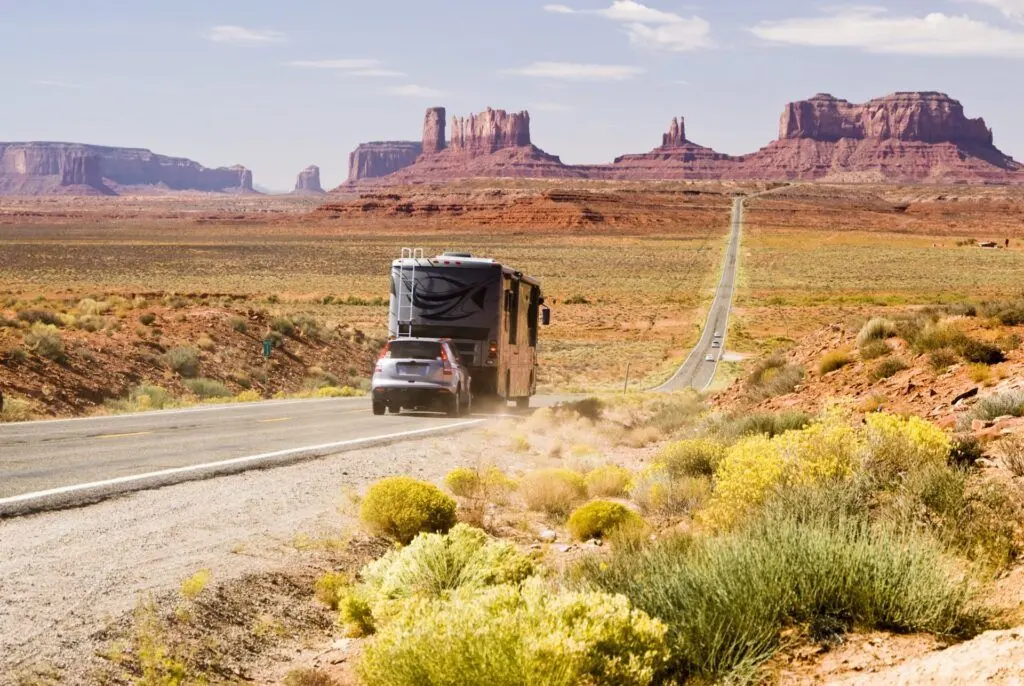
Class A and Class C motor homes are excellent for traveling, allowing passengers to enjoy the full amenities of their living space. However, their limitations become apparent once you reach your destination, as exploring the area can be difficult without breaking camp, especially if your rig is cumbersome for navigating around town. The solution is to tow another vehicle behind you. There are three options for this: a full flatbed or enclosed trailer for your vehicle, a dolly that lifts just the front wheels of the towed vehicle (toad), or flat towing, in which all four wheels of the toad remain on the ground. Each method has its advantages and disadvantages. In this Valley RV Supercenter blog post, we explore the option of flat towing.
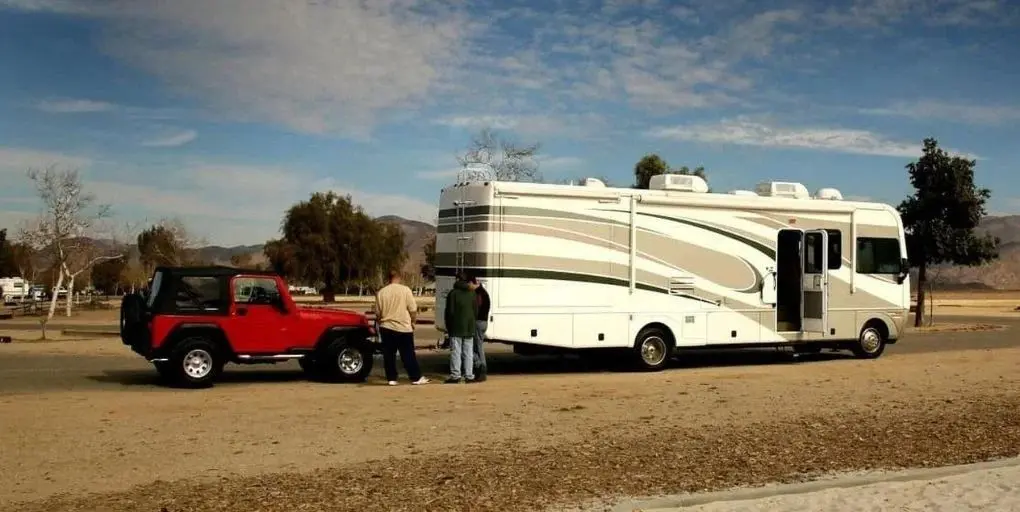
The advantages of flat towing include:
- Easiest to set up and take down at each campsite
- The least amount of weight is involved for a given toad model
- There is no trailer or dolly to store at home or at the campsite
The disadvantages of flat towing include:
- There is a limited choice of vehicles that can be flat towed
- It has the most complicated initial setup
- You can’t back up while the toad is attached, not even a little
- More wear and tear on the toad, particularly compared to a full trailer

The first step in setting up a towing system for your motorhome is to check its maximum towing capacity and the weight capacity of its trailer hitch, as these may differ. You need to abide by the lower of the two figures. Another critical factor, especially if you carry a lot with you, is the Gross Combined Weight Rating (GCWR), which is the total weight of your rig, the towed vehicle (toad), and everything you’ve packed into them.
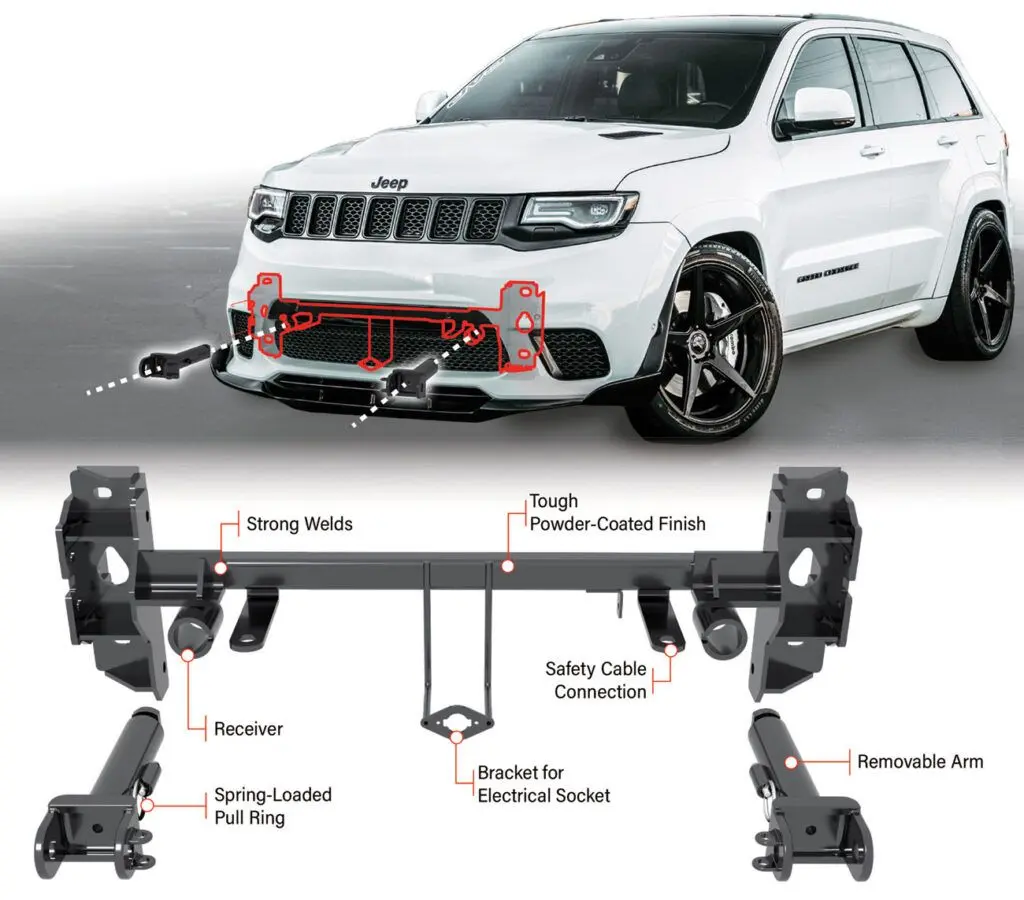
The odds are that your current vehicle is not flat towable. The general category of flat-toable vehicle includes:
- Off-road vehicles like the Jeep Wrangler/Gladiator, Ford Bronco, and, though a bit older, the Geo Tracker/Suzuki Sidekick and Suzuki Samurai. The 4×4 drivetrains for these models are ideal for flat towing, and recognizing this, manufacturers have often taken steps to make the process easier.
- 4×4 mid-size and full-size pickup trucks and SUVs based on them (e.g., 4Runner, Xterra, Suburban, and Tahoe). The ability to set their 4×4 transfer cases to neutral generally makes these vehicles flat tow capable.
- Small, compact cars with manual transmissions. These are the lightest options, making them ideal if your towing capacity is limited. Unfortunately, manual transmission models are becoming increasingly rare.
- AWD crossover SUVs are popular for comfort and versatility, but you need to verify if they are flat-towable. For example, pre-2014 AWD Honda CR-Vs can be flat-towed, but models from 2014 and later cannot.

Whichever model you’re considering, make sure to check its owner’s manual (often available online) for your specific model, year, and trim to confirm it is truly flat-towable, as this can vary even within a particular year and trim. Additionally, every toad must have a baseplate installed, which is model-specific. So, ensure you can find a baseplate for your selected model. It is also recommended that the baseplate be both bolted and welded, so you’re not relying solely on the welds. Besides the baseplate, you will need:
- Flat-towing towbar
- Wiring kit for lights that is compatible with your toad
- Supplemental braking system
- Possible: Battery on-road trickle charger. Many models require the vehicle to be in accessory mode to release the steering wheel lock, which can drain your battery unless it is kept charged.
The cost of all these items ranges from $3,500 to $4,500, depending on the product. If you have it all professionally installed, which is highly recommended for first-timers, the additional cost will be $1,500 to $2,500.

As in all towing, you want the tow bar to be as level with the baseplate as possible. Be sure to read up on flat-towing procedures for your specific toad model. For instance, the Pre-2014 Honda CR-Vs require that while idling, you place the transmission in each gear, including Drive and the lower gears, before being towed, and sometimes at stops along the way. Also, make sure the toad has no alignment issues that pull it to the left or right, because what is merely annoying when driving can be disastrous when being towed.
If you are new to flat-towing, we recommend consulting with someone experienced in the process, as well as the staff at Valley RV, to determine the best flat-towing setup for your specific rig. Additionally, the Valley RV Supercenter Service Department is fully capable of setting up your flat-towing arrangement.