
RV Research Guide
Towing capacity lookups, glossary terms, and RV shopping context.
Use this section to compare tow ratings, understand key RV weight definitions, and prepare for a better tow-vehicle match.
The RV Research Guide is designed as a content hub that combines towing lookups with glossary context. Use it to compare tow ratings, learn important weight terms, and make better RV buying decisions.

Search towing capacities
Lookup options are sourced from the live RV towing APIs by year, make, and model.
Browse the RV Towing Guide
Browse the GuideFeatured Glossary Terms
Payload Capacity
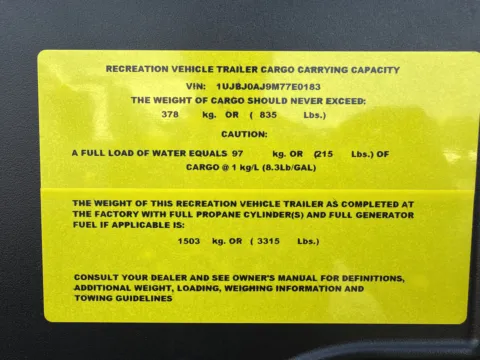
Payload capacity is the maximum combined weight of cargo, passengers, fluids, and gear that a vehicle or RV can safely carry. It is an important figure for both tow vehicles and RVs.
GVWR
Gross Vehicle Weight Rating, or GVWR, is the maximum allowable weight of an RV including cargo, fluids, and passengers. Staying within GVWR is essential for safe handling, braking, and compliance.
GCWR
Gross Combined Weight Rating, or GCWR, is the maximum total allowable weight of a tow vehicle plus the RV or trailer it is pulling. It is one of the most important towing specifications to understand before buying or towing an RV.
Dry Weight
Dry weight is the weight of an RV without cargo, fluids, propane, or passengers. It is often used as a starting point when estimating towing requirements.
Tongue Weight
Tongue weight is the downward force a trailer places on the hitch of the tow vehicle. Proper tongue weight is critical for towing stability, steering control, and safety.
Hitch Weight
Hitch weight is the amount of weight a trailer places on the hitch of the tow vehicle. It is closely related to tongue weight and helps determine whether a towing setup is safe.
Curb Weight
Curb weight is the weight of a vehicle with standard equipment and fuel but without passengers or cargo. It is often used when evaluating tow vehicle and payload calculations.
Frequently asked questions